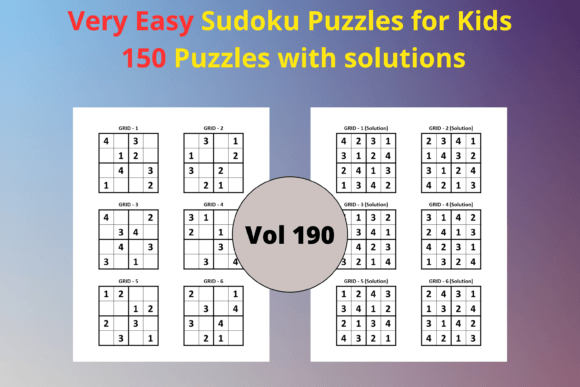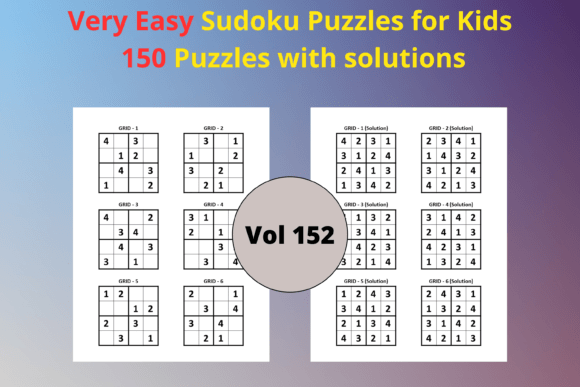
Very Easy Sudoku for Kids 152: 150 Fun 4×4 Puzzles
Why Simple Sudoku Starts a Lifetime of Logical Thinking
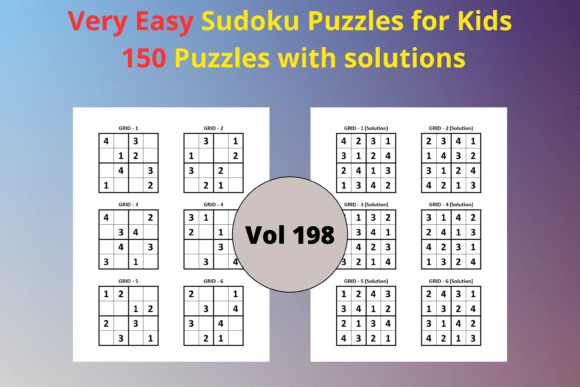
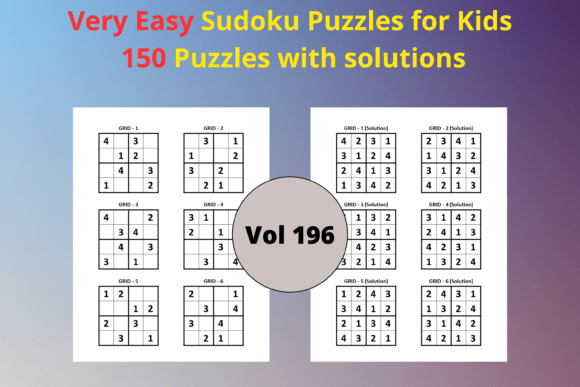
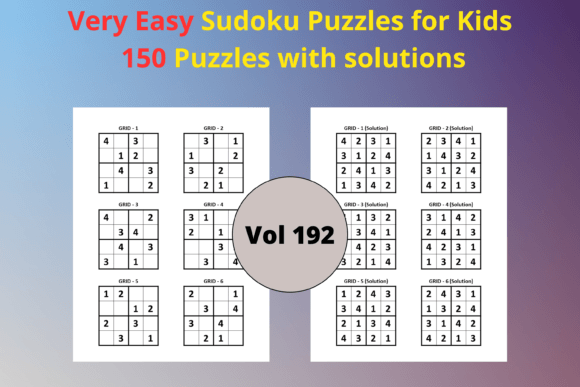
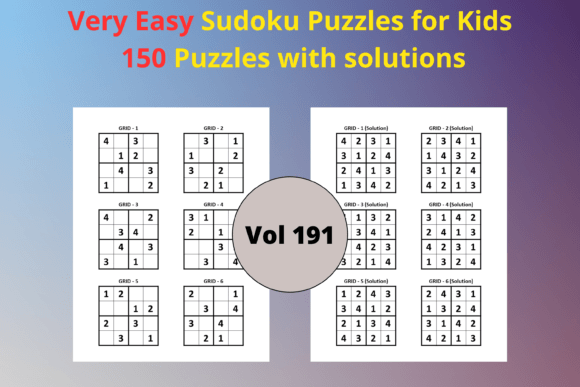
Introducing a child to puzzles often begins with a gentle challenge, and Very Easy Sudoku for Kids 152 hits that sweet spot. Instead of throwing young minds into a standard 9×9 grid, this collection uses a friendly 4×4 format that feels like play. Each puzzle only asks a child to fill in numbers 1 through 4, a manageable task that builds confidence quickly. For creators and educators, the value goes far beyond a single activity sheet. The pack contains 150 different puzzles, each with its own matching solution, making it a complete resource that can be printed, bound, gifted, or published with almost no extra effort.
What makes this set especially useful for adults who work with kids is the thought behind the structure. The puzzles are very easy, never demanding guesswork or advanced strategy. A 4×4 sudoku relies on the same core logic as larger versions — each row, column, and 2×2 block must contain the numbers 1 to 4 exactly once — but removes the intimidation factor. For teachers, parents, or entrepreneurs crafting activity books, that gentle learning curve is gold. You don’t have to worry about frustrated children or overwhelming initial steps. Instead, you hand over a puzzle where success feels inevitable, and that small win encourages the next one.
The pack arrives as both a print-ready PDF and an editable PPTX file, sized at 8.5×11 inches, which is the standard for most published workbooks and KDP interiors. This dual format opens up creative doors far beyond a simple puzzle book. You can leave the pages as they are and upload the PDF directly to Amazon KDP to create a crisp paperback. Or you can open the PowerPoint file and adjust font styles, add your own branding, slip in a cute animal illustration, or even translate the header text for a bilingual version. The solutions are included right after the puzzles, so your final product remains self-contained and valuable to the buyer or student.
150 Reasons to Keep Little Hands Busy
One of the quiet frustrations with many puzzle packs is the lack of variety. A child might breeze through a dozen sheets and then face repeat patterns that dull the challenge. Very Easy Sudoku for Kids 152 sidesteps that problem by offering 150 distinctly different 4×4 puzzles. The sheer volume means you can use the resource over and over without anyone getting bored. For a classroom teacher, that translates into a daily warm-up activity for half a school year. For a parent running a home daycare, it’s a go-to rainy-day rescue. For a KDP publisher, 150 puzzles inside a book represent excellent value on the sales page — customers see quantity plus quality.
The arrangement of the interior is straightforward: puzzles come first, followed by the solutions. No fancy interleaving, no confusing page jumps. A child can work through the front section, and an adult can check answers easily in the back. This simplicity makes the pack friendly for anyone who isn’t a puzzle expert. A homeschooling parent who’s never solved a sudoku can still confidently present the activity and verify the result. Small business owners who want to include a few free printables in a customer loyalty folder can pull a single page and still offer the solution card, creating a polished mini-offering.
Creative Directions for the Pack Beyond a Standard Book
Even though the product is ready to upload as a KDP interior, its real power lies in how you can adapt it. Consider these practical pathways, each one tapping into different audience needs while keeping the core asset intact.
Turning Puzzles into a Themed Activity Book
Use the editable PPTX to add seasonal borders, cute characters, or simple coloring elements next to each grid. Suddenly, a plain sudoku page becomes a springtime bunny puzzle or a space-themed number challenge. This small customization can set a KDP book apart from dozens of generic competitors. You could create a “Little Learners Sudoku: Spring Edition” by pasting a flower clipart beside the title and using a pastel accent. Because the puzzles themselves remain the same, you keep the proven difficulty level while refreshing the visual appeal.
Printable Busy Bags and Travel Kits
Print the pages two per sheet, laminate them, and punch a hole in a corner to create a reusable wipe-clean booklet. Pack it with a dry-erase marker, and you have an instant travel activity that fits in a purse. Parents love quiet time solutions for restaurants or waiting rooms. The 4×4 grid size is small enough that the entire puzzle fits on a half-page, leaving room for a color-in border or a sticker reward area. For small business owners who sell handmade kids’ items, this laminated puzzle set becomes a low-cost add-on that increases perceived value.
Classroom Differentiation Without Extra Work
Not every five-year-old is ready for the same level of logic. The very easy nature of these puzzles means they work beautifully as a confidence builder for children who struggle with attention or math anxiety. A teacher can print a handful of pages for a corner activity, knowing the solutions are at hand if a student gets stuck. Because the set contains so many puzzles, no two children need to have the identical sheet at the same time, reducing comparison and copying. You can also use the PPTX to insert simple English or Spanish instructions, making the resource inclusive without starting from scratch.
A Lead Magnet That Grows an Email List
Bloggers and content marketers can take advantage of the editable format to add their website URL, logo, or a brief call-to-action at the bottom of each page. Offer a “Free 10-Page Kids Sudoku Sampler” as a downloadable incentive for newsletter signups. Parents get an instant useful gift, and you build a relationship. Because the puzzles are genuinely easy, the sampler leaves a positive impression — no one abandons a puzzle in frustration, and they’re likely to return for more. The full 150-puzzle set can later become a paid product or a bonus inside a membership.
Using the Editable PPTX to Match Your Brand Voice
The PPTX file is more than a convenience; it’s a bridge between a generic puzzle and your unique audience. You’re not locked into someone else’s fonts or spacing. Perhaps your brand is playful and informal — swap the header to a hand-drawn style and add a cheerful “You did it!” stamp on the solution pages. If you cater to neurodivergent children or those with visual processing needs, you can enlarge the grid, use a high-contrast number font, and add a subtle colored background behind each 2×2 block. The pack stays structurally identical, but the visual presentation becomes audience-specific. No design degree required; even basic PowerPoint skills let you make meaningful tweaks.
For publishers who plan a series, consistency matters. Create one master template slide with your custom look, then copy it across all puzzle pages. This approach turns a single purchase into an entire product line backbone. You might release “Sudoku for Tiny Thinkers: Level 1” now and later build a grade-specific series, each with the same trusted puzzle style but different cover art and difficulty branding. Because the solutions are already done, your production time stays minimal.
Keeping the Finished Product Clear and Kid-Friendly
Children’s eyes scan pages differently than adults’. When you prepare your final output — whether for print or digital use — prioritize spaciousness. The original files are formatted for 8.5×11 inches, which gives ample room for a large grid and fat numbers. Avoid the temptation to shrink everything to fit more puzzles per page. A single puzzle centered on a sheet, maybe with a small illustration or a “Puzzle #1” label, feels inviting rather than cramped. The solution page can serve double duty: show the completed grid plus a tiny motivational phrase like “Great job puzzling!”
If you’re laminating, make sure the numbers stay bold enough to read under a glossy finish. Test a sample with a dry-erase marker to see if the ink smears. With the editable PPTX, you can thicken the font if needed or adjust the grid lines to be slightly darker. These small checks keep frustration at bay — a child who can clearly see the difference between a handwritten 1 and 4 will keep going. A smudged grid leads to giving up. The goal is effortless usability on both sides: for the adult preparing the activity and the child solving it.
How Educators and Parents Can Stretch the Pack’s Value
Imagine a weekday morning routine: children come in, settle at their desks, and find a fresh sudoku waiting. They know the rules, the grid is small, and success arrives within minutes. That calm start sets a focused tone. The pack can be sliced into term-long sets without repeating puzzles. For reinforcement at home, parents can clip three puzzles onto the fridge each Sunday and challenge the family to finish them by dinner. Because the difficulty is steady, younger siblings can join in. The solutions being printed right after the puzzles means no searching through a separate answer key, which is a relief when little hands are eager to check their work.
Tutors and learning coaches will appreciate the logical skill the puzzles quietly build. A 4×4 sudoku teaches pattern recognition, sequencing, and the concept of each number appearing “only once” in a group — all foundational math ideas. It’s not about arithmetic; it’s about structured thinking. You can talk aloud with the child: “Look, we already have a 3 in this row, so that empty square can’t be 3. What could it be?” That verbal scaffolding transforms a simple puzzle into a reasoning lesson, and having 150 fresh opportunities means the conversation never gets stale.
Turning the Pack into a KDP Best-Seller Without Overwhelm
KDP publishers often stall at the formatting stage. They have a great idea but spend hours wrestling with page numbers, margins, and mirror images. Very Easy Sudoku for Kids 152 removes that hurdle. The PDF is designed as a ready-to-upload interior: no headers that bleed into the wrong margin, no page numbers that conflict with your cover design, and a straight puzzles-then-solutions order that every child’s activity book follows. You upload the file, pick a catchy cover, set your price, and publish. The editable PPTX lets you tweak if you want, but you don’t have to. This frictionless path makes the pack equally valuable for first-time publishers and seasoned sellers who need a quick product to fill a seasonal gap.
Because the niche — kids’ sudoku — has consistent demand from parents and teachers, a well-presented book can earn passive income for years. Use the editable file to add a front matter page: a short “How to Play” guide with a sample puzzle and a fun fact. That extra touch meets E-E-A-T signals: you demonstrate expertise by explaining the game, authority by providing a complete solution set, and trustworthiness by delivering an error-free, clear product. Children’s content buyers are discerning; they want confidence that a puzzle book won’t confuse or frustrate their little ones. With 150 tested easy puzzles and solutions, you can honestly promise that.
Practical Inspiration for Different Creators
- Graphic designers can build a beautiful, cohesive interior theme around the puzzles, then sell the reimagined version as their own exclusive digital product.
- Homeschool bloggers can offer a free “Puzzle of the Week” series on social media, pulling from the pack and driving traffic to a paid full download.
- Party planners can print a few pages as placemats for a kids’ table — the 4×4 grid is instantly recognizable and keeps children engaged before the cake.
- Occupational therapists might use the puzzles as a low-pressure task to practice fine motor skills with a pencil or stylus, adjusting the PPTX to leave larger answer boxes.
- Subscription box curators can include a mini booklet as a monthly activity, customizing the cover with the box’s branding via PowerPoint.
Each of these paths starts with the same set of 150 puzzles and solutions. The value multiplies because the foundation is solid and the customization is easy. You’re not reinventing the logic game; you’re applying it to a context that serves real people in a busy, noisy world.
Making the Most of the Very Easy Difficulty
It’s tempting to jump to harder puzzles because they seem more “impressive.” But with young children, the very easy label is a feature, not a drawback. A 4×4 sudoku solved independently gives a child the same sense of accomplishment that a 9×9 gives an adult. That emotional payoff is what keeps them returning to puzzles. When you design a product or a classroom activity around this pack, highlight that ease. Use phrases like “first sudoku success,” “no-stress logic games,” or “builds puzzle confidence.” Parents are often searching for exactly that — an introduction without tears. The pack delivers 150 of those small victories, each one helping a child think a little more clearly, a little more patiently.
Remember that steady difficulty also lets children develop their own strategies. They might start by scanning for the most-filled row. Later they learn to check the small 2×2 blocks. Over dozens of puzzles, that method becomes instinctive. Your resource, whether it’s a printed book or a laminated set, becomes a silent teacher. And because you have the editable PPTX, you could even insert a simple “Tip of the Day” on occasional pages to guide that discovery.
Putting It All Together Without Losing Quality
At its core, Very Easy Sudoku for Kids 152 is a large, well-organized collection of simple logic puzzles that anyone can use, adapt, and share. The clarity of the PDF guarantees a smooth publishing experience. The editable PPTX invites personal expression without breaking the puzzle’s integrity. The 150-puzzle volume ensures longevity, while the 4×4 very easy level guarantees accessibility for the youngest solvers. Whether you’re building a KDP empire, enriching a classroom, or sending a thoughtful gift to a busy parent, this pack is a practical tool that elevates any project with minimal effort.
The best resources don’t force you to become a puzzle expert overnight. They hand you the finish line and let you decide how to dress it up. So take the pack, open that PowerPoint file, and start imagining the smiling children who will trace their fingers across those neat little grids — learning, succeeding, and asking for just one more puzzle before bed.