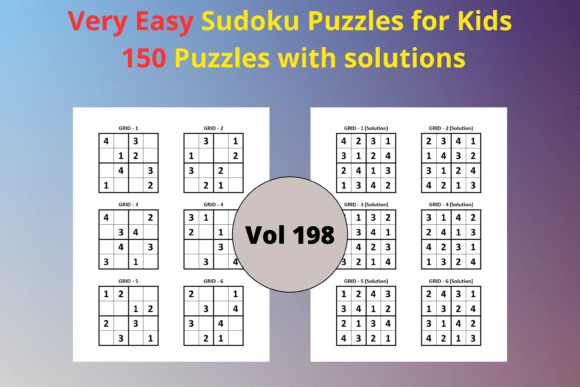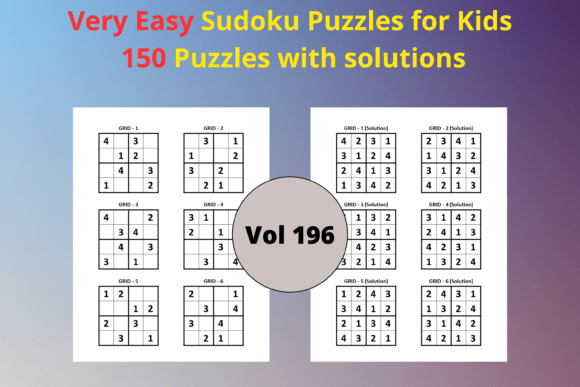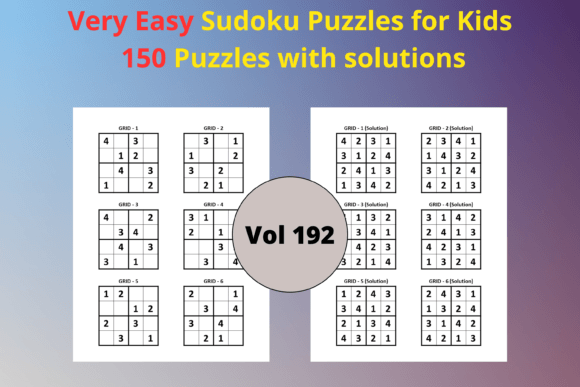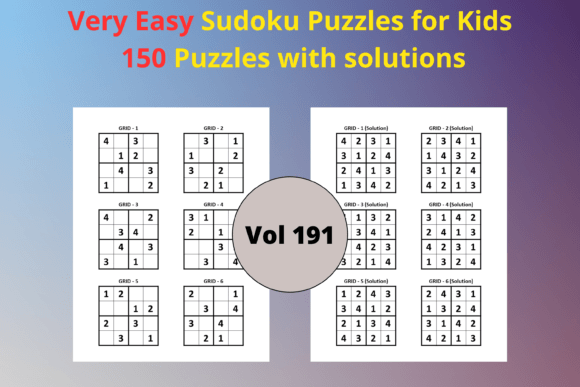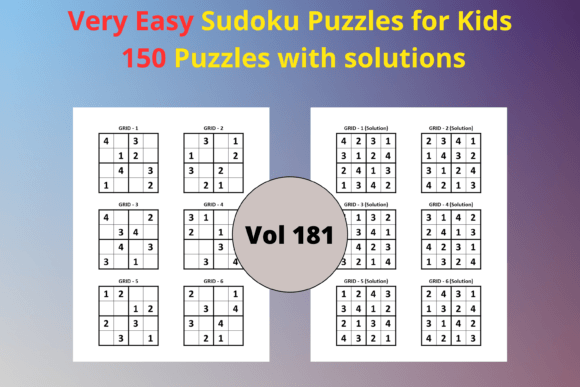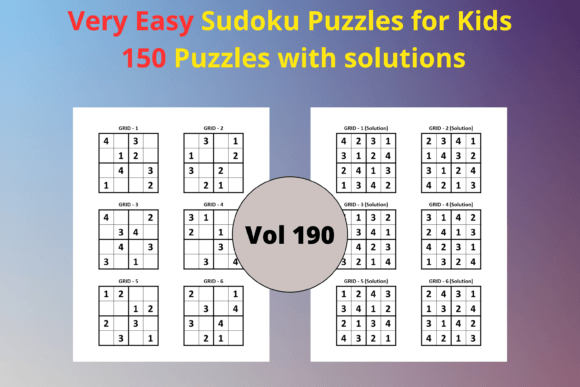
Very Easy Sudoku for Kids 190: 150 4x4 Sudoku Puzzles
Imagine having a single digital pack that lets you create a full-sized activity book for children in an afternoon. Very Easy Sudoku for Kids 190 is not a printed book you buy off a shelf—it's a ready-to-upload interior file plus an editable source deck, built for Amazon KDP, classroom handouts, or any print project you have in mind. Inside, you get 150 different very easy 4x4 Sudoku puzzles designed specifically for young beginners, each with its matching solution neatly laid out. The entire package arrives as a print-ready PDF and a fully editable PPTX file, already sized to 8.5 x 11 inches. If you've ever struggled with puzzle design or formatting for self-publishing, this collection removes nearly all the friction.
What makes a 4x4 grid the right starting point? A classic 9x9 Sudoku can overwhelm a six-year-old. With just four small quadrants and numbers one through four, the very easy level gives kids a quick win while they learn the mechanics of deduction. Very Easy Sudoku for Kids 190 keeps every puzzle at that gentle difficulty. The designs don't throw early learners into confusion. Instead, each page reinforces pattern recognition, attention to detail, and the quiet satisfaction of completing a task on their own. For the adult buying or using the pack, that developmental sweet spot matters because it translates to repeat engagement—kids who feel capable are more likely to pick up the next puzzle without coaxing.
Saving Time on Layout and Content Creation
Layout eats hours. Most independent publishers, educator-side hustlers, and activity blog creators know this well. You might have a great concept for a kids’ puzzle book, but turning 150 clean, correctly spaced grids into a polished interior file is repetitive, detail-heavy work. Very Easy Sudoku for Kids 190 sidesteps that entirely. The included PDF is formatted to KDP’s typical interior requirements, complete with solutions placed in a logical sequence. You upload, set your cover, and go live. No recalibrating margins or nudging elements pixel by pixel. The PPTX file adds a second layer of convenience—you can change fonts, add your own branding, insert an introduction page, or tweak the number of puzzles per sheet without rebuilding from scratch.
This time saving matters most when you want to launch a product quickly, test a new niche, or create a lead magnet for a parenting website. Instead of spending a weekend on formatting, you spend an hour adapting an existing, professionally arranged file. That speed can also be a deciding factor if you run a small print shop or design on-demand printables for Etsy. You simply import the content, apply your logo, and you're ready to serve customers the same day.
Who Finds the Greatest Value in This Collection
The obvious audience is KDP publishers building a children’s activity book catalog. But the usefulness stretches further. A second-grade teacher preparing morning work or early finisher tasks can print selected puzzles from the PPTX without editing a single slider. A homeschool parent looking for screen-free logic practice gets 150 days of quick mental warm-ups. A children's librarian running a puzzle club can photocopy pages as needed. A therapist working on executive function skills with young clients may find the 4x4 format a friendly, non-threatening tool. Even a grandparent who wants to mail a custom activity booklet to grandchildren can pull from the editable file to add personal messages between puzzles.
The common thread is a need for reliable, low-prep content that children actually enjoy completing. Very Easy Sudoku for Kids 190 doesn't claim to be a comprehensive math curriculum. It's a contained, purpose-built resource that solves a specific problem: keeping young minds engaged with puzzles that are simple enough to build confidence yet structured enough to teach logical thinking. Because every puzzle has a unique solution, adults don't need to double-check answers manually—all 150 solutions sit at the back of the file, clearly numbered for quick reference.
How the Very Easy Difficulty Level Supports Learning
It's tempting to push kids toward harder puzzles too quickly. The very easy designation here is intentional. Each 4x4 grid uses only the numbers 1, 2, 3, and 4. Many cells come pre-filled, so children are never staring at a nearly blank grid. That scaffolding keeps frustration low. As they work through the 150 puzzles, they begin to internalize strategies—scanning for missing numbers in a row, cross-checking a column, noticing which small square still needs a digit. Even without formal instruction, the repetition builds mental habits that transfer to more complex Sudoku later on.
For the parent or educator, this gentle progression means you’re not spending time reteaching rules every session. A quick explanation of the basics, maybe a demonstration on the first puzzle, and most kids can work independently. That independence is a major perk. While the child is absorbed in the puzzle, you might answer emails, prepare dinner, or work with another student. The pack practically buys you small pockets of quiet focus throughout the day.
Customization Possibilities with the Editable PPTX
The PPTX file transforms the pack from a static interior into a tool you can reshape for multiple projects. You could extract 30 puzzles and create a sampler booklet to give away on a blog. You could add dotted lines for cutting and turn each puzzle into a task card. Some publishers add a "Certificate of Completion" at the end of the file before uploading a new KDP title. Others adjust the tone by changing the header style—maybe an outer space theme or a friendly animal motif. Since the source file is editable, you're not locked into one look. The puzzles themselves remain untouched, so you retain the careful puzzle design while personalizing the packaging.
This flexibility also means the pack works for different age segments within early elementary. A kindergarten teacher might increase the font size slightly for little hands. A first-grade workbook creator might add simple instructions in a bolder type. The key is that you start with a foundation that's already accurate and cleanly laid out. You are editing, not fixing.
Realistic Use Cases for Creative Professionals
Picture a blogger who writes about screen-free parenting. She wants to offer a free printable that actually gets used. She grabs the PPTX, pulls 10 of the 150 puzzles, exports a branded PDF, and adds it to her resource library. Newsletter subscribers get instant value, and she builds trust without designing a single puzzle from scratch. A marketing professional organizing a community family day might use the PDF to print a puzzle station—children solve Sudoku while parents chat, and the activity costs nothing beyond paper and pencils. A freelance designer building a portfolio for kid-focused brands can quickly produce a polished sample activity book interior to show potential clients, knowing the puzzle quality is consistent throughout.
Even small business owners who run cafes or waiting rooms can benefit. A stack of printed puzzles on a corner table, with crayons, gives young families a reason to linger a little longer. The licensing is straightforward for personal or commercial print use (always verify terms), making it a low-risk addition to a customer experience strategy.
Print-Ready Formatting That Reduces Common KDP Headaches
Amazon KDP requires specific trim sizes, margins, and bleed settings. Very Easy Sudoku for Kids 190 is already set to 8.5 x 11 inches—a size that's common, easy to handle for small hands, and compatible with standard home printers if you're selling a printable rather than a physical book. The PDF arrives with no fiddly formatting surprises. That means fewer proof copies and less back-and-forth adjusting gutter margins. For someone launching their first activity book, this predictability can be the difference between a stress-free upload and a frustrating trial-and-error process.
The inclusion of solutions for every puzzle also adds a layer of professionalism that buyers expect. Many customers browsing Amazon for puzzle books will check whether answers are included. If they aren’t, a book can receive negative feedback quickly, especially for children's products where a parent or teacher might need to verify work. With 150 solutions already paired and paginated, you sidestep that common complaint entirely.
Considering Fit and Any Limitations
This collection is designed with a very narrow, very clear focus: very easy 4x4 Sudoku for kids. If you need medium or hard puzzles, or grids larger than 4x4, you'll want a different resource. The pack won't serve a publisher targeting older children or adults who crave a challenge. The uniformity is a strength when you want consistency, but it also means the content doesn't scale in difficulty within the book. Buyers searching for a gradual ramp from very easy to easy might notice all puzzles sit at the same gentle level. You can, of course, segment them yourself—perhaps using the PPTX to intersperse harder puzzles from another source—but out of the box, Very Easy Sudoku for Kids 190 stays true to its title.
That said, for the right use case, uniformity is exactly what you want. A kindergarten puzzle book, a summer bridge activity pad, a restaurant kids’ menu insert—these don't need escalating difficulty. They need predictability, low frustration, and a clean design. The pack delivers on all three.
Practical Ways to Stretch the Content Across Multiple Projects
The 150 puzzles give you volume, and volume opens up creative repackaging. You can split them into three 50-page booklets. You can publish a paperback and also offer a separate spiral-bound version. You can design a digital download that families print at home, perhaps organized by month. You can add themed coloring borders in the PPTX to create a seasonal product—winter Sudoku, summer Sudoku, back-to-school Sudoku—all from the same core puzzle set. The editable nature of the file makes this lightweight variation possible without hours of extra design work.
If you run a membership site or a subscription box, you can drip puzzles out weekly. A teacher might assign two puzzles per week as part of a math center rotation. A kids’ magazine publisher could license the content for a recurring puzzle page. Because the pack is digital, these uses scale without the need for ongoing puzzle creation. You buy once and strategically reuse.
Sudoku as a Quiet, Screen-Free Routine Builder
Many families and classrooms struggle with transitions. A very easy Sudoku puzzle offers a simple ritual: sit down, hold a pencil, and complete a small, satisfying task before moving on. The 4x4 grid fits neatly into a five-minute window. Over 150 days, that's almost a full school year of daily puzzle practice if used once a day. The structure may help some children develop a morning calm-down routine or a way to reset after lunch. For adults facilitating these moments, having a ready-made stack of age-appropriate puzzles on hand removes one more barrier to a smoother day.
The puzzles themselves aren't flashy. They don't beep or light up. That's a feature in a world saturated with screens. Kids get the physical feedback of writing a number, the visual order of a completed grid, and the cognitive stretch that comes from holding two or three constraints in mind at once. These small victories accumulate, often without the child realizing they're building skills.
Making an Informed Choice for Your Project
If your aim is to release a children’s activity book on Amazon, stock a classroom with quiet-time resources, or grow an email list with a helpful freebie, Very Easy Sudoku for Kids 190 aligns cleanly with those goals. The package removes the heavy lifting of puzzle creation and layout, freeing you to focus on packaging, marketing, or simply connecting with young learners. The 150 puzzles and 150 solutions provide enough material for a 300-page interior when printed single-sided, or a compact 150-page book if you place puzzles and solutions back-to-back. The PPTX file empowers quick edits, while the PDF remains a fallback for instant upload. Both formats are sized at 8.5 x 11 inches, a dimension that plays well with standard formatting tools and home printers alike.
Before purchasing, consider your end user. If you're serving children roughly ages 4 to 7 who are just beginning their puzzle journey, this very easy set will likely fit perfectly. If your audience includes second graders who already breeze through basic grids, you may need a supplemental source. But for that sweet spot of early logic development—where confidence matters more than challenge—this collection is built to perform exactly as promised.
Very Easy Sudoku for Kids 190 doesn't try to be everything. It's a carefully targeted collection of 150 very easy 4x4 Sudoku puzzles with solutions, formatted for immediate use. That clarity of purpose is what makes it a practical tool for publishers, educators, and creative professionals alike. The fact that it arrives as a done-for-you interior and an editable source file simply means you spend less time formatting and more time putting content into the hands of children who will genuinely enjoy it.