Finding the Right Puzzle at the Right Time with Very Easy Sudoku for Kids 161
Some afternoons call for a little quiet. Maybe the baby finally went down for a nap, the older child finished lunch, and ten minutes of calm would feel like a gift. That is exactly when a simple, confidence-building puzzle can shift the energy of an entire room. Very Easy Sudoku for Kids 161 fills that gap in a way few other activity resources do. It is not flashy, not overcomplicated, and that is precisely the point.
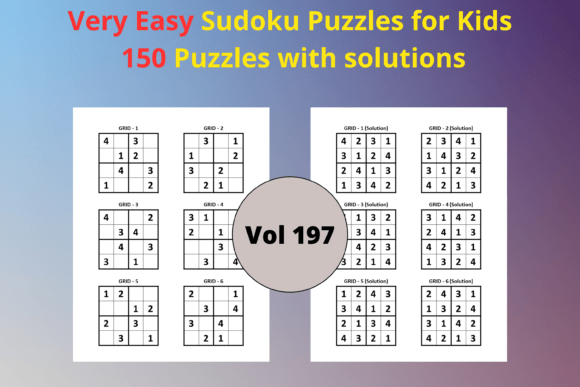
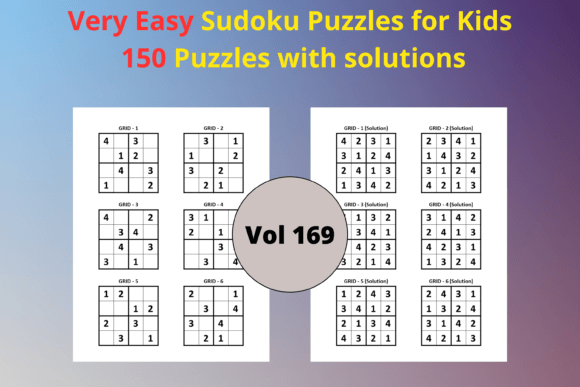
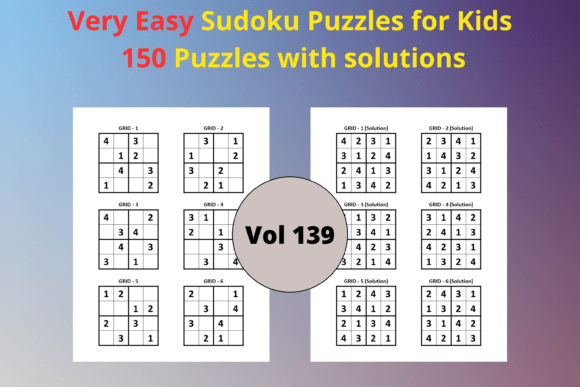
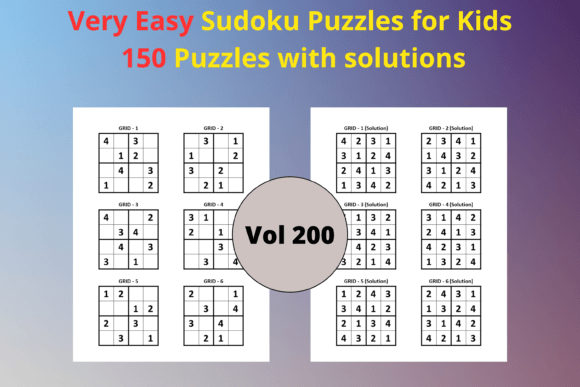
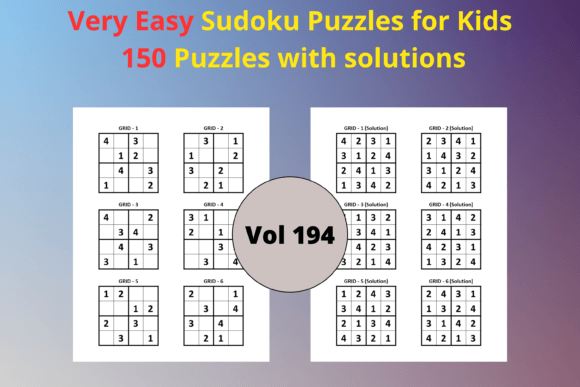
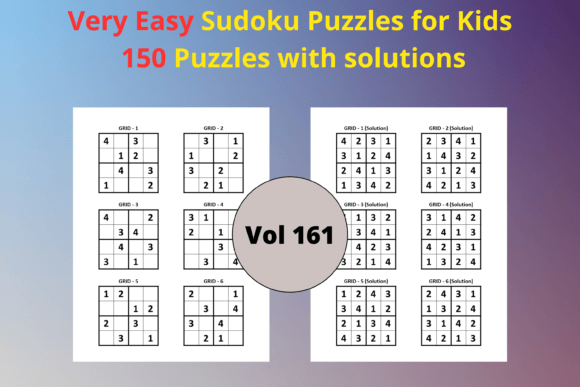
What many parents and educators discover is that the youngest puzzle solvers need something different from what typical activity books provide. Standard 6x6 or 9x9 Sudoku grids ask too much of a four- or five-year-old still learning how to hold a pencil and follow multi-step logic. A 4x4 grid changes everything. With only four numbers to place, four rows, and four columns, the task stays within reach. This particular collection offers 150 very easy Sudoku puzzles for kids, all in that accessible 4x4 format, plus a matching set of solutions. The number 161 in the title simply references the total page count when puzzles and solutions sit side by side in a KDP-ready layout.
Why 4x4 Sudoku Puzzles Work for Beginners
Think about how a young child approaches a problem. They scan the whole picture, notice one obvious thing, and act on it. With a 4x4 grid, the next move almost announces itself. A row has a 1, a 2, and a 4 already. What is missing? The child points, writes a 3, and beams. That small win builds the kind of momentum that keeps a kid coming back.
Older kids and adults sometimes forget how fragile early puzzle confidence can be. One overly difficult page, and a kindergartener might declare they are “not good at math.” The Very Easy level puzzles in this pack guard against that discouragement. Every single one of the 150 puzzles is designed so a beginner can complete it independently or with minimal guidance. No tricky patterns, no ambiguous choices, just straightforward logic that rewards attention.
The Quiet Utility of Ready-to-Use KDP Interiors
There is a practical reason this product exists in the form it does. Someone publishing activity books on Amazon KDP does not want to spend hours laying out grids in PowerPoint or wrestling with PDF formatting. They want a finished interior file, sized correctly at 8.5 x 11 inches, that they can upload directly or tweak inside the included editable PPTX file. Very Easy Sudoku for Kids 161 delivers exactly that. The puzzles and solutions are already paired, paginated sensibly, and styled cleanly enough to print without further design work.
For a parent putting together a road trip binder, the same ready-to-print PDF means grabbing the file the night before, hitting print, and sliding the pages into a folder. No scouring the internet for individual worksheets, no checking whether the answer key matches. Everything lives in one place.
Scenarios Where This Puzzle Collection Becomes a Quiet Hero
Beyond the obvious classroom or homeschool setting, these puzzles slip into real life in surprising ways. Consider a few moments where a simple, low-stakes activity saves the day.
Waiting Rooms and Travel
A pediatrician's waiting room holds toys, yes, but also a rotating cast of children who have touched everything. Bringing a few printed puzzle pages from this pack gives a child something fresh and personal to focus on. The same holds for airplane trays, restaurant tables, and the backseat of a car. Unlike a tablet, paper puzzles do not run out of battery or require headphones. And because the puzzles are intentionally very easy, a parent does not need to hover and explain every step.
Early Morning Classrooms
Teachers often need a soft-start activity, something children can do independently while everyone trickles in and backpacks get hung up. A 4x4 Sudoku puzzle takes a few minutes, settles the brain into logical thinking, and leaves the child feeling capable before the first lesson begins. Having 150 different puzzles means variety across a whole school year without repeating the same sheet twice.
Multi-Age Households
An older sibling practices long division while the younger one wants to “do homework” too. Handing the preschooler a 4x4 Sudoku page keeps the peace and mirrors the focused, studious vibe the family is aiming for. The younger child learns the posture of problem-solving, even before formal math instruction begins.
How Different Users Benefit Differently
A resource like Very Easy Sudoku for Kids 161 does not serve just one audience. Its value shifts depending on who is holding the file.
For KDP sellers and activity book creators: This is a shortcut to a finished product. The 8.5 x 11 inch trim size matches Amazon's most common paperback dimensions. The PPTX file allows branding adjustments, title page additions, or page reordering. Since the content targets a clear niche — very easy kids' Sudoku — the book practically positions itself in the marketplace. Sellers can bundle it into a larger activity book or publish it as a standalone title with minimal effort.
For occupational therapists and learning specialists: Grid-based puzzles strengthen visual scanning, fine motor control, and sustained attention. A 4x4 format keeps the executive function demands low while still exercising the underlying skills. Having a large supply of puzzles means a therapist can assign graduated challenges or send sheets home for practice without worrying about the difficulty creeping too high.
For grandparents and occasional caregivers: Not everyone feels confident guiding a child through a complex activity. These Sudoku puzzles are self-explanatory to anyone who understands the basic rule: each row and column needs one of each number. A grandparent can sit beside a child, enjoy watching them work, and offer a hint only when asked. The activity bridges generations without requiring anyone to learn new technology or rules.
For parents of reluctant learners: Some children resist anything that looks like a worksheet. But a Sudoku grid, with its numbers and empty boxes, can feel more like a game. Framing it as a “number puzzle challenge” rather than schoolwork often bypasses resistance. The very easy difficulty ensures early success, which can shift a child's entire relationship with paper-based activities.
Finding the Editable Edge in the PPTX Format
The inclusion of an editable PowerPoint file sets this product apart from many puzzle collections floating online. For a KDP seller, this means the puzzles can be dropped into an existing template, resized for a different trim, or recolored to match a brand palette. For a teacher, it means removing the solutions and printing only the student-facing pages. For a parent creating a personalized activity book, it means inserting the child's name on a cover page or interspersing Sudoku pages with other activities.
The PDF file provides certainty — what you see is exactly what prints. The PPTX provides flexibility. Having both in one purchase eliminates the frustration of buying a resource and realizing it cannot be adapted to a specific need.
What to Consider Before Using or Publishing These Puzzles
Even a well-designed resource benefits from thoughtful application. The puzzles are labeled very easy for a reason. A five-year-old encountering Sudoku for the first time will find them appropriately challenging. A seven-year-old who has solved dozens of puzzles may breeze through in under a minute and need something harder. Understanding the target solver's experience level helps place these puzzles where they will have the most impact.
For those publishing on KDP, consider how the book description will set buyer expectations. Mentioning the 4x4 grid size and very easy difficulty upfront helps customers find the right book for their child or student. The term “very easy Sudoku for kids” already communicates a lot, but pairing it with an age range or skill level description adds useful clarity.
Print quality matters too. The 8.5 x 11 inch pages print cleanly on standard letter paper, but if the intent is to publish the interior as a KDP paperback, checking the bleed settings and margin requirements beforehand prevents rework. The PPTX file makes margin adjustments straightforward should they be needed.
Stretching the Collection Across Different Settings
A single download containing 150 puzzles and 150 solutions goes a long way. One family might print ten pages for a long weekend trip and forget about the file for months. Another might laminate a set of puzzles and use dry-erase markers for a reusable morning activity station. A daycare provider might slot one puzzle into each child's daily folder as a take-home connection between care and family. A library running a children's program could print a selection and set them out alongside oversized pencils during a quiet reading hour.
The versatility stems from the simplicity. Because the puzzles do not rely on reading ability, language proficiency, or cultural context, they work across a wide spectrum of homes and classrooms. A child in an English-speaking household and a child learning English as a second language approach the same 4x4 grid the same way — by looking at the numbers, noticing the pattern, and filling the gap.
When Simplicity Feels Like a Strength
There is a lot of noise in the world of kids' activities. Apps compete for attention, subscription boxes arrive with complicated projects, and educational toys require assembly. A simple printed Sudoku puzzle might seem almost too humble in comparison. Yet that humility is precisely why it works. It does not overstimulate. It does not require a learning curve. It asks a child to sit, look, think, and try. The reward is intrinsic — the satisfaction of a grid completed correctly, a moment of focused accomplishment before moving on to whatever comes next.
Very Easy Sudoku for Kids 161 serves that moment reliably. Whether pinned to a fridge, tucked into a backpack, or bound into a published activity book, the puzzles do their quiet work. And for the adults facilitating that work — the parents, teachers, sellers, and caregivers — having a polished, printable, editable resource removes every barrier between intention and action.