Is Very Easy Sudoku for Kids 169 the Right Puzzle Format for Your Young Learner?
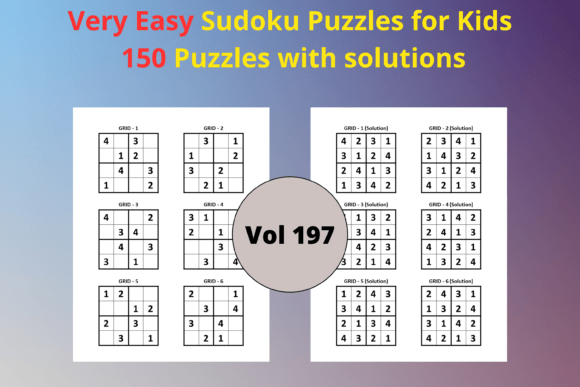
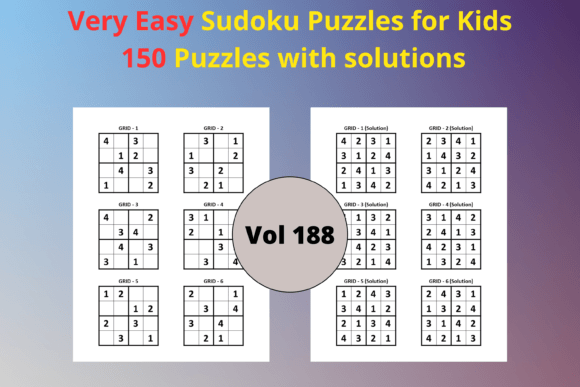
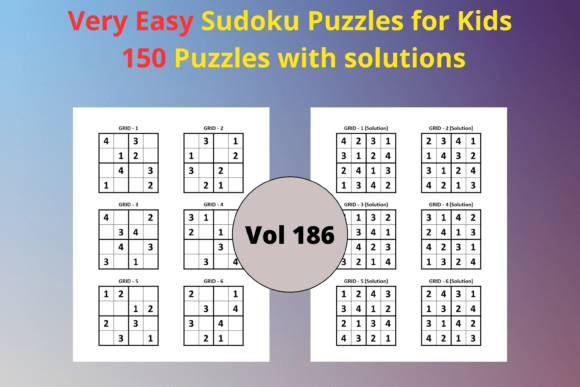
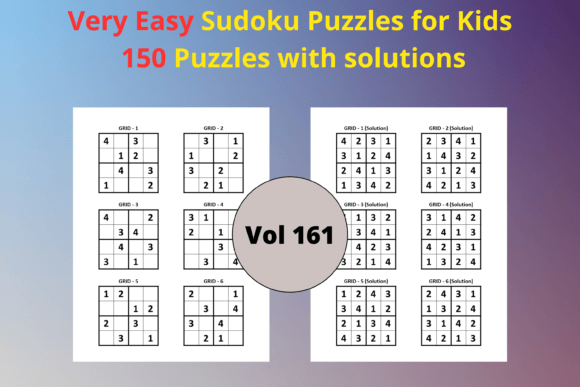
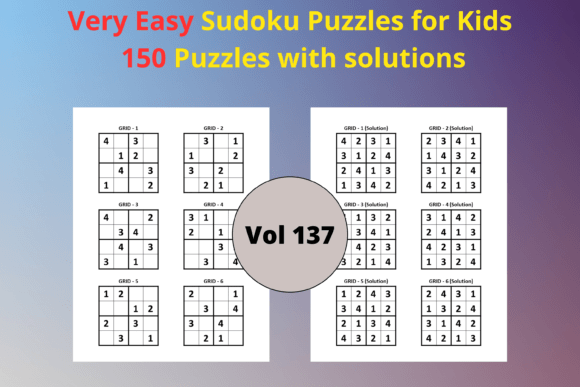
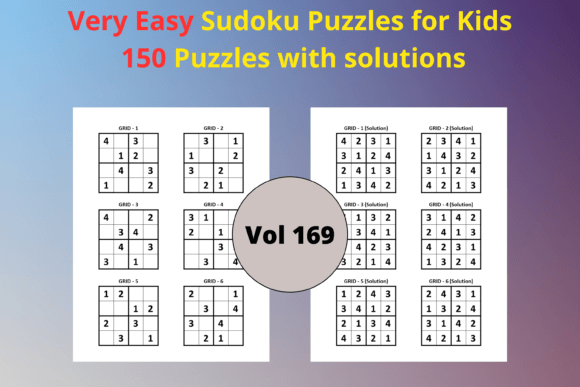
Finding developmentally appropriate logic puzzles for children can feel like navigating a maze of grid sizes, difficulty labels, and digital versus print formats. The pack known as Very Easy Sudoku for Kids 169 bundles 150 distinct 4x4 Sudoku puzzles with the same number of solution pages, all within an 8.5 x 11 inch layout that is equally suited to home printing or KDP (Kindle Direct Publishing) interiors. But how does this specific offering compare with other sudoku styles for kids, alternative puzzle types, or even building your own activity book from scratch? This article examines what sets 4x4 very easy sudoku apart, where it shines, and where other choices might better serve your goals.
What Very Easy Sudoku for Kids 169 Actually Offers
At its core, this resource is a ready-to-upload PDF and editable PPTX file containing 150 beginner-level Sudoku grids and their solutions. Each puzzle uses a 4x4 grid, meaning 16 cells where children place the numbers 1 through 4 once per row, column, and 2x2 subgrid. The “very easy” designation generally indicates that the starting grids leave a high number of prefilled cells, requiring only a few logical deductions to complete. Unlike generic Sudoku books that start with 4x4 and quickly move to 6x6, this product commits entirely to the simplest introduction, making it a focused tool rather than a progressive puzzle book.
The dual file format is a practical detail: the PDF requires no design software and maintains exact formatting, while the editable PPTX allows you to change fonts, add instructions, or rearrange pages before publishing or distributing. The 8.5 x 11 inch size matches standard letter paper, ensuring that many puzzles fit on one page without the fine print that frustrates small hands. Solutions are placed after the puzzles, which mimics conventional puzzle book structure—useful if you are creating a bound activity book or printing in sequence.
How 4x4 Sudoku Stacks Up Against Larger Grids
When evaluating Sudoku options for early learners, the jump from 4x4 to 6x6 or traditional 9x9 represents more than just added cells. A 4x4 grid limits the symbol set to 1–4 and asks children to hold only one logical constraint at a time. By contrast, a 6x6 grid introduces 2x3 subgrids and the numbers 1–6, which demands scanning two-digit associations and a broader working memory. A 9x9 grid, even at “easy” levels, often requires pencil marks, cross-hatching, and the ability to sustain attention through multiple elimination steps—skills that typically develop around ages 8–10.
Very Easy Sudoku for Kids 169 deliberately stays in the 4x4 zone, which means it is less likely to create frustration for children who are just beginning to understand the exclusive nature of rows and columns. The tradeoff, naturally, is limited replayability as a child’s skill grows. A 6-year-old solving 150 of these puzzles might be ready for 6x6 grids before using the entire pack. Parents and educators often find that a collection this size works best when shared across multiple children in a classroom or when used as a confidence-building bridge before introducing larger grids.
Why “Very Easy” Matters More Than You Might Think
Difficulty levels in Sudoku are not standardized across publishers. One company’s “easy” might present as many as 10 empty cells in a 4x4 grid, which for a novice can feel daunting. Very Easy Sudoku for Kids 169 appears to maximize prefilled numbers so that each puzzle requires recognizing just a few direct placements—often only one or two empty spots per row or column have a single possible number. This design turns the activity into a visual scanning game rather than an abstract logic test.
In comparison, some 4x4 puzzle collections labeled “easy” may still include grids where two empty cells in a row allow more than one possible answer, requiring a child to check the intersecting column before committing. That tiny increase in cognitive load can cause some beginners to abandon the activity. The “very easy” approach works akin to training wheels: it teaches the mechanism of Sudoku without asking a child to plan several moves ahead. However, this also means the puzzles do not build stepwise complexity over the course of the book, which is something a progressive puzzle book would offer.
Comparing Format Flexibility: PDF, PPTX, and What You Lose
Many printable puzzle packs arrive as a single locked PDF, which is perfect for immediate use but leaves no room for adaptation. Very Easy Sudoku for Kids 169 distinguishes itself by including an editable PowerPoint file. This opens possibilities like increasing the font size for vision-impaired children, translating instructions into another language, or inserting a child’s name into a header for a personalized gift. The tradeoff is that PowerPoint is not a vector graphics editor; it can handle basic text and image placement, but anyone wanting to redesign the grid styling or add custom illustrations would still need a dedicated design program.
When you compare this to puzzle generators or apps, the static pack has limitations. An app can adjust difficulty in real time and provide unlimited puzzles, but it also comes with screen time, potential ads, and the absence of fine motor practice that comes from handwriting numbers. The print-ready pack, conversely, offers tangible, low-tech engagement. For classrooms with limited device access or for parents mindful of screen exposure, the static PDF and PPTX approach may prove more versatile despite lacking infinite puzzle generation.
When Very Easy Sudoku for Kids 169 Might Be the Right Choice
There are specific scenarios where a dedicated 4x4 puzzle pack makes more sense than a mixed-difficulty puzzle book or an all-in-one activity resource. Classroom teachers who need a consistent, short logic warm-up for kindergarten or first-grade students appreciate that every puzzle uses the same format and difficulty, requiring no repeated instruction. Occupational therapists sometimes use such simple grids to work on visual discrimination and number formation without cognitive overload. And self-publishers creating a first KDP activity book can use this pack as a low-risk content layer because the formatting is already complete and the puzzle count meets the expectations of a typical paid product.
For home use, the pack might suit a child who has shown interest in adult Sudoku books but is thwarted by the density and small numbers. Giving them a “very easy” 4x4 alternative can feed that interest without pushing them into material that feels impossible. It also serves as a travel activity: printed loose pages with a clipboard occupy far less space than a puzzle book that a child may only complete a fraction of.
When You May Need Another Option
If your learner already completes 4x4 puzzles in under a minute with few mistakes, this pack has served its purpose before you open it. A child at that stage benefits more from a book that transitions from 4x4 to 6x6 and eventually introduces simple 9x9 puzzles. Those progressive books typically contain fewer puzzles at each level, but the variety maintains engagement and gently stretches ability.
Similarly, if your goal is to build a general reasoning curriculum, very easy Sudoku alone will not cover the full spectrum of logic skills. Picture-based puzzles, pattern sequences, mazes, and word searches each engage different cognitive processes. A well-rounded activity book for children often mixes these formats; a pure Sudoku pack like Very Easy Sudoku for Kids 169 works best as a supplement rather than the central spine of a learning plan.
Another consideration involves symbols. Some children connect more readily with puzzles that use shapes, animals, or colors instead of numbers. For those learners, a 4x4 grid with four distinct pictures can be more intuitive because they do not need to translate a numeral into a concept. While you could theoretically replace the numbers with symbols in the PPTX version, doing so manually for 150 puzzles would be time-consuming. Pre-made symbol Sudoku books present a more efficient alternative for that early developmental window.
Breaking Down the 150-Puzzle Count
At first glance, 150 puzzles might appear oversized for a single child, but in practice, it enables several useful patterns. Teachers can print one or two per student per day for an entire school term without repetition. Parents with multiple children can give each child their own set without photocopying. And self-publishers creating a bound puzzle book can layer in coloring pages or other activities to break up the Sudoku sequences while still offering substantial value.
In contrast, a 50-puzzle pack of the same format would be consumed quickly in a classroom, requiring more frequent repurchases or downloads. The 150-puzzle volume also aligns with KDP page count expectations: including solutions, the pack likely runs around 100–150 pages depending on layout, which hits the sweet spot for many low-content book categories. For a one-time home buy, it may be more than needed, but it allows skipping around and repeating favorites, which is difficult with a bound spiral book that follows a fixed order.
Practical Layout and Readability Factors
The 8.5 x 11 inch page size allows roomy grids. Each 4x4 puzzle can occupy a generous center portion of the page, leaving margins that prevent small hands from bending the paper over a table edge while writing. When comparing to books that shrink multiple puzzles onto one page to save space, the single-puzzle-per-page approach (or even a few per page with ample white space) reduces visual clutter and helps children focus on one row or column at a time. This is especially important for young children who have not yet developed the ability to visually isolate information in a crowded page.
Solutions printed separately, rather than on the same page upside-down or in tiny font, also support independent checking. A child can verify their completed grid without teacher or parent intervention, building self-reliance. The downside is paper usage: printing 300 pages (150 puzzles plus 150 solutions) requires a substantial ream, so many users may choose to print only the puzzle pages and view solutions digitally, or print two-sided to conserve paper.
How the Pack Compares to DIY Puzzle Creation
Some caregivers and educators wonder whether generating their own 4x4 Sudoku grids is worthwhile. Free online tools can produce unlimited grids with customizable difficulty. However, generating, formatting, and proofreading 150 puzzles to match the polish of a pre-made pack takes several hours, even for someone comfortable with design software. For a self-publisher, that time could be better spent on marketing or creating higher-value original content. For a parent, the hours might feel out of proportion to the benefit of free puzzles.
The pre-made pack, in effect, trades a one-time purchase cost for saved labor and guaranteed consistency. The puzzles are already solved and checked, eliminating the risk of a faulty grid where a row ends up with two identical numbers. Errors in Sudoku puzzles are frustrating for children who cannot yet logically identify why their correct reasoning fails. That reliability is the primary advantage of a completed commercial product over a rushed DIY alternative.
Choosing Based on Your Primary Use Case
Decision-making here often comes down to three use profiles. If you are a self-publisher creating a first KDP activity book and you need a reliable, formatted interior with minimal learning curve, the PDF and editable PPTX combination addresses that need directly. If you are an educator with a classroom of 5- to 7-year-olds who need a daily independent logic routine, the volume and consistency align well. If you are a parent of a single child who is already solving simple puzzles at speed, a diverse puzzle book—perhaps one blending mazes, dot-to-dots, and 4x4 Sudoku—may hold attention longer than 150 nearly identical Sudoku challenges.
Very Easy Sudoku for Kids 169 does not aim to be a one-stop logic development program. It is a narrowly focused collection designed to make the very first steps into Sudoku feel rewarding rather than puzzling. Whether that matches your needs depends less on the quality of the product—which centers on a clean, print-ready format—and more on where your child or audience sits on the continuum of puzzle familiarity.