Antique Title Page Frames Clip Art Vol 1: Time-Tested Ornament for Today’s Creatives
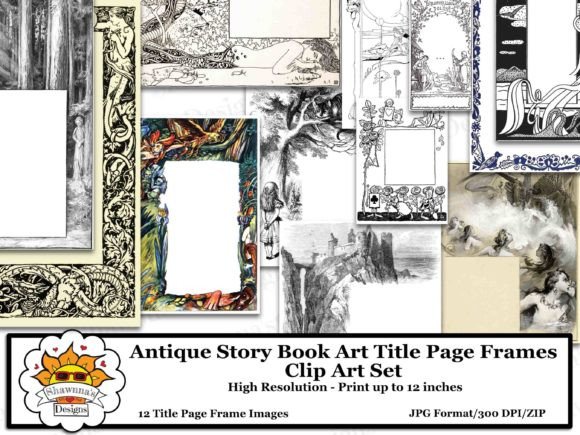
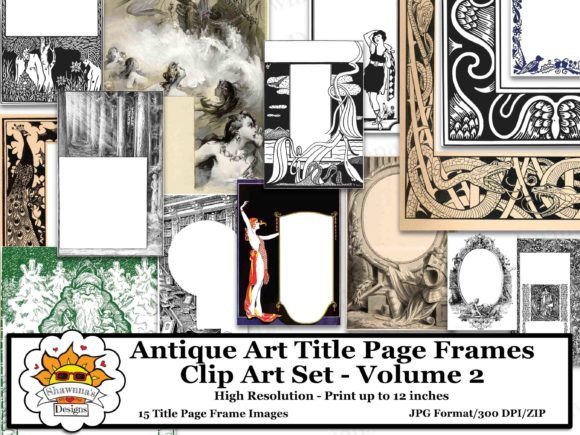
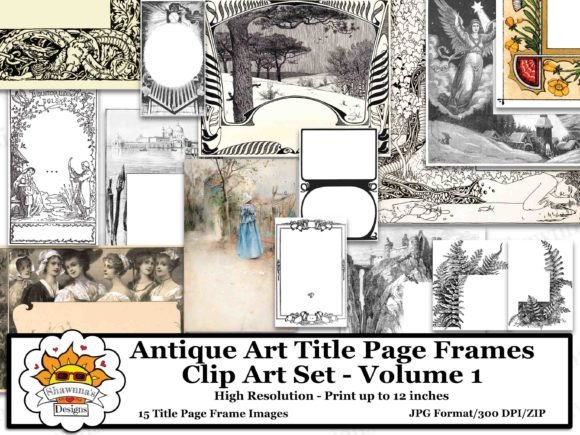
Some of the most compelling design elements aren’t born from scratch—they’re rediscovered. Antique Title Page Frames Clip Art Vol 1 brings together 15 meticulously restored title page frames that have been aging quietly in public domain archives for over a century. Each one carries the weight of old-world printing, the kind of hand-drawn filigree and balanced ornament that modern digital tools can imitate but rarely replicate. What makes this particular set stand out isn’t just the art itself, but the care behind it: scanned from physical antiques—books, magazines, and ephemera gathered over years—then cleaned, enhanced, and delivered as high-resolution JPGs. Whether you’re crafting a junk journal, building a KDP interior, or designing wedding stationery, these frames offer a shortcut to authentic vintage atmosphere without the copyright headaches.
The real magic lives in the stories these frames can tell when placed in the right hands. Because they were sourced from public domain treasures and then enhanced for modern use, they slip effortlessly into both personal passion projects and full‑scale commercial work. You might layer one behind a poem for a handmade greeting card, or use another as a structural border for an eBook chapter opener. The end result always feels intentional and lived‑in, as if the piece has a history stretching back long before your design file was ever created.
Creative Souls and Industries That Lean on Vintage Ornament
It’s easy to imagine these frames living only in the worlds of scrapbooking or journaling, but the audience for Antique Title Page Frames Clip Art Vol 1 is far wider. Self‑published authors often use title page frames to lend gravitas to a book’s front matter—especially in historical fiction, poetry collections, or esoteric nonfiction where a whisper of the past adds credibility. Small business owners selling digital printables on Etsy or Creative Market grab them to build planner pages, recipe card templates, and wedding invitation suites that feel bespoke without endless hours of illustration.
Graphic designers operating in the boutique branding space find value here as well. A coffee shop that wants its menu to evoke a 19th‑century Parisian café can use a subtly distressed title page frame around the logo or headline. Stationery studios love how a single border, recolored softly in sepia or faded navy, can anchor a minimalist design with warmth. Even educators and event planners reach for these assets when creating certificates, table numbers, or vintage‑themed signage that needs to look cohesive. The common thread is a hunger for ornament that feels real—not computer‑generated, not artificially textured, but genuinely pulled from a physical artifact.
From KDP Interiors to Junk Journals: Where the Frames Do the Heavy Lifting
If you’re deep in the Kindle Direct Publishing world, you know that a well‑designed interior can swing a buyer’s decision. Antique Title Page Frames Clip Art Vol 1 gives you instant decorative headers, chapter title pages, section dividers, and end‑of‑chapter vignettes that hold a reader’s eye. A non‑fiction guide on herbal remedies or folklore, for example, becomes far more immersive when every new section is introduced within a weathered, scholarly border. The frames also solve a practical problem for low‑content book creators: you can drop a frame onto a blank page, add a line of text, and suddenly have a themed notebook page, a reflection prompt, or a coloring book page ready to publish.
Junk journal enthusiasts and scrapbook makers often talk about the hunt—the thrill of finding exactly the right piece of ephemera. This collection shortens that hunt drastically. You can print the frames onto tea‑stained paper, cut them out, and let them mingle with lace, old stamps, and handwritten notes. Because the images are already digitized, you get the joy of physical cutting and pasting with the ease of a repeatable supply. Some makers even print them onto transparencies or vellum to layer over photographs, creating dreamy, dimensional spreads without original antique books falling apart in their hands.
Wedding designers, too, have quietly adopted frames like these. A menu card bordered by a delicate Victorian title page frame feels intentional rather than kitschy. Escort cards, welcome signs, and even favor tags gain a cohesive vintage language when you pull from a unified set. The high resolution means you can print at a range of sizes without losing the fine detail that makes antique engraving so captivating. One frame can work for a 5×7 invitation today and be enlarged for a tabletop sign next month, all without jagged edges or blur.
Why High Resolution and True Public Domain Status Matter
Not every vintage clip art set is created equal. With Antique Title Page Frames Clip Art Vol 1, the images are sourced exclusively from materials over 100 years old and now firmly in the public domain. That means no guessing about copyright, no attribution required, and no limitations on commercial use. When you’re creating products to sell—whether physical goods or digital downloads—peace of mind is priceless. The high-resolution JPG format further seals the deal for print and screen alike.
But here’s what sets the collection apart from a quick online image search: the human touch. The creator scanned physical items from antique books, magazines, and odds and ends found while antiquing, then spent significant time cleaning up stains, tears, and fading without stripping the character. The files aren’t flattened automatically; they’ve been finessed so the fine lines stay crisp and the paper texture feels genuine. You’re essentially paying for the curatorial eye, the scanning labor, and the preservation effort—not for the original art itself, which belongs to everyone.
Working Smart with Antique Title Page Frames: Formats, Layers, and Adaptability
Because the set delivers JPG files, it’s worth thinking about how they’ll play with your tools. JPGs don’t come with built‑in transparency, so the frames arrive on a white or lightly aged background. For many crafters, that’s a feature—they want the page color behind the frame to echo old paper anyway. If you need the background to disappear, a few clicks in Photoshop or even Canva’s background remover will isolate the decorative border. The high resolution ensures that even after background removal, the edges remain clean rather than pixel‑fringed.
Print designers will want to check the pixel dimensions before dropping a frame into a layout. Most frames from the set are generously sized for standard book pages and stationery formats. Scaling down is safe; scaling up dramatically could test the limits of bitmap art. For eBooks and digital planners, the JPG format works seamlessly inside template software and PDF editors. You can also convert them to PNG after removing the background if your project demands layering over colored backgrounds or photographs. The flexibility is there, even if the native format requires a small extra step for transparency.
Color adjustment opens another door. Many users leave the frames in their original black‑and‑white or sepia state, but a quick hue shift in a graphics program can turn an antique engraving into soft blush, gold foil effect, or even a deep botanical green. Because the line work is so fine, maintaining a single‑color look often yields the most authentic result. The frames also layer beautifully with modern typography—pairing a clean sans‑serif font inside a heavily ornamented border creates a tension that feels editorial and fresh.
Balancing Patina and Precision: Strengths and Gentle Limitations
The strengths of Antique Title Page Frames Clip Art Vol 1 lie in its atmosphere and authenticity. No algorithmic filter can replicate the organic irregularities of a 19th‑century engraving. These frames carry tiny imperfections that ground a design and make digital work feel human. The collection’s cohesion is another plus: all 15 frames belong to a similar visual family, so you can mix them within a project without visual whiplash.
On the flip side, the JPG format means you’ll occasionally need to plan for backgrounds. If you frequently design for products that demand transparent overlays—like apparel mockups or translucent stickers—you’ll likely convert the files or combine them with clipping masks. The vintage aesthetic, while versatile, might not suit hyper‑modern brands or minimalist layouts that reject ornament entirely. And because these are raster images, not vector, enlarging them beyond their native resolution for large‑format signage may introduce softness, though for most printed applications the size holds up impressively well.
Another gentle limitation worth mentioning is the learning curve with distressed edges. Some frames include the natural paper aging around the decorative border. While many users adore this patina, others may need to crop or clean the edges if they want a pure decoration on a stark white background. A little familiarity with basic image editing resolves this quickly, but it’s something to keep in mind if you expect a completely pristine digital file straight out of the folder.
Where Antique Title Page Frames Shine Brightest
The set really comes alive in hands‑on, product‑focused environments. Picture a home‑based Etsy seller designing tarot journal inserts: the frames wrap around reflective prompts, making each page feel like a discovered manuscript. Or a craft cocktail book author who uses a different ornate frame to introduce each recipe chapter, tying the drinks back to forgotten eras. Social media managers for heritage brands or historical societies can also lean on the frames to create quote cards that look archived rather than mass‑produced.
Classroom teachers and homeschool parents often overlook clip art like this, but it’s surprisingly effective for history units, poetry anthologies, and certificate templates. A simple “Student of the Month” certificate printed with an antique frame suddenly carries more weight. Librarians creating bookmarks for a classic literature event find that the frames align visually with the aged books readers love. Even software developers building vintage‑themed user interfaces for games or interactive stories will spot opportunities to incorporate the borders as UI ornamentation.
Because the commercial license covers both personal and client work, freelance designers can confidently use Antique Title Page Frames Clip Art Vol 1 in paid projects without worrying about additional royalty fees. This alone makes the set a strategic asset for those who regularly need a go‑to source of authentic vintage ornament. Instead of spending hours scouring archives and cleaning up scans, you can open a folder, drag a frame in, and move on to the more creative parts of your project.
The Story Behind the Frames: Preservation Meets Practical Creativity
There’s a quiet narrative baked into every frame. The person behind this collection spent years gathering antique books, magazines, and loose ephemera from estate sales, dusty bookshops, and online public domain sources. Items that might have crumbled away have been digitally preserved and enhanced. The cleaning process was careful—not sterile. Stains that added soul remained, while distracting tears and smudges were eased out. The result is a living archive that feels respectful of the past while being entirely usable today.
This background might seem like a footnote, but for end users it actually matters. Knowing that the frames were not mass‑generated by software but instead hand‑selected from real artifacts builds confidence in the product’s uniqueness. When you drop one of these borders into a wedding invitation suite or a self‑published poetry book, you’re borrowing a fragment of craft history that already holds meaning. The fact that it’s been delivered in a simple, high‑resolution JPG format makes that history touchable, printable, and ready for whatever you dream up next.
Antique Title Page Frames Clip Art Vol 1 doesn’t try to be everything to everyone. It’s a focused, carefully collected set of ornamental frames that solves a specific creative puzzle: how to add genuine antique character to a project without spending hours in restoration or fretting over legal gray areas. From quiet journal pages to polished commercial products, these 15 frames stand ready to become the visual backbone of work that feels both rooted and imaginative.