Antique Art Nouveau Frames Clip Art Set: A Strategic Visual Resource for Brands, Publishers, and Creatives
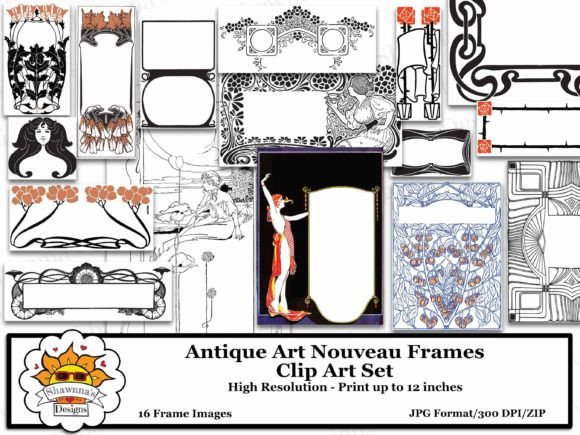
Design decisions rarely happen in a vacuum. Every visual element you introduce into a project — whether it’s a book interior, a social media graphic, a product listing, or a branding mockup — carries weight. It communicates taste, era, trustworthiness, and attention to detail. The Antique Art Nouveau Frames Clip Art Set is one of those assets that, when used thoughtfully, can shift a design from generic to intentionally crafted. This isn’t simply a folder of vintage borders. It’s a collection of 16 high-resolution, public-domain antique frames — each over a century old — that have been digitally restored and prepared for modern commercial and personal use. Understanding how to deploy a resource like this strategically can directly affect the perception of your brand, the cohesion of your creative work, and even the perceived value of what you sell.
What makes this particular set notable is its origin and curation. The creator spent years collecting antique imagery from physical sources like old books, magazines, ephemera, and odds and ends found while antiquing. Those items were then scanned, cleaned up, and formatted into high-resolution JPG and PNG files. The frames are no longer just dusty artifacts; they are practical building blocks for contemporary projects — KDP interiors, scrapbooking, junk journals, packaging concepts, wedding stationery, and more. But the real value lies not in the pixels themselves, but in the strategic opportunity they represent. In a visual economy saturated with sterile stock imagery and artificially generated art, genuine antique elements provide a rare form of credibility and emotional resonance. That is a positioning advantage worth planning around.
What the Antique Art Nouveau Frames Clip Art Set Actually Contains
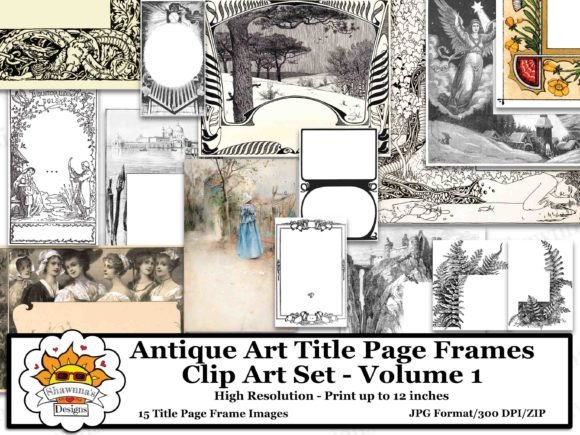
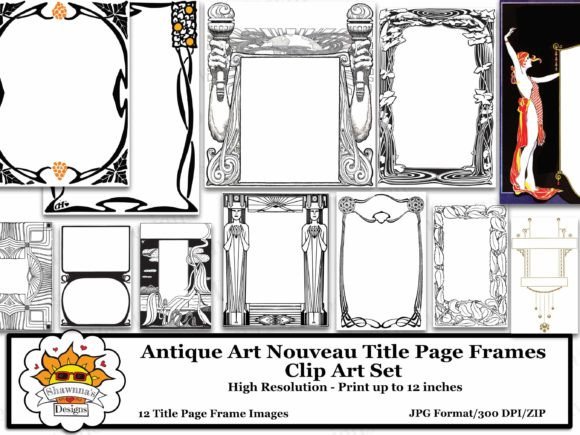
Before integrating any asset into a workflow, it helps to know exactly what you are working with. This set offers 16 distinct frame designs in the Art Nouveau style — characterized by organic, flowing lines, botanical motifs, and a sense of hand-crafted elegance that defined the movement around the turn of the 20th century. Some files are supplied as JPGs with white backgrounds, while others are provided in PNG format with transparency, giving you immediate flexibility in layering. Because the images are sourced from the public domain and over 100 years old, there are no copyright restrictions. You can use them for personal projects, client work, or commercial products without worrying about licensing fees or attribution.
The creator’s role here is not that of an original illustrator, but that of a preservationist and curator who has done the time-consuming work of locating, scanning, and restoring these elements. This distinction matters when you evaluate the cost versus the hours saved. The true product is the curation and preparation — someone has already sifted through archives, separated genuine quality from noise, and delivered a clean, usable asset pack. For a small business owner or freelancer who values time as a finite resource, this changes the buying decision from “do I need clip art?” to “does this curated set align with a project that requires this specific emotional tone?”
Why Art Nouveau Frames Carry Strategic Weight in Modern Communication
Visual trends recycle, but certain eras hold persistent cultural meaning. The Art Nouveau period signals craftsmanship, authenticity, and a deliberate break from industrialization — values that resonate deeply with today’s audiences who are skeptical of mass-produced digital perfection. When a brand or creator uses Antique Art Nouveau Frames Clip Art Set elements, they aren’t just adding decoration. They are borrowing a historical context. This can be a powerful tool for:
- Brand differentiation: In markets where competitors rely on minimalist, sans-serif uniformity, a well-chosen antique frame adds humanity and texture.
- Emotive packaging: For small-batch product makers — soaps, candles, artisanal foods — these frames can lend an impression of heritage and care.
- Trust signaling: Established visual codes often translate into perceptions of longevity and reliability, even for a digital-first brand.
The key is to avoid simply slapping a vintage frame onto a modern layout without thought. The frame must serve a purpose: framing a core message, elevating a product photo, or providing visual breathing room in a dense layout. When used with clear intent, these antique elements become a subtle form of nonverbal persuasion.
Intentional Integration vs. Random Decoration
A common pitfall with decorative assets is treating them as afterthoughts. The Antique Art Nouveau Frames Clip Art Set can either elevate your work or create visual clutter, depending on how you approach it. The difference comes down to planning. Before dropping a transparent PNG frame onto a cover design or a journal page, ask a few practical questions:
- What is the primary message or focal point of this layout?
- Does the frame’s organic complexity complement or compete with that focus?
- Will the frame’s color — often sepia, cream, or black line art — harmonize with the existing palette, or should it be adjusted digitally?
- In what contexts might an antique aesthetic undermine your intended tone? (For example, a high-tech SaaS landing page would likely confuse visitors with ornate borders.)
Intentional users treat these frames as structural components. In a KDP interior, a single Art Nouveau corner element can unify chapter headings, creating a sense of continuity that feels curated rather than templated. A junk journal creator might repeat a particular frame motif throughout a collection to establish a signature look. In each case, the frame is not a sticker; it’s a deliberate design choice that supports the overall goal.
Practical Use Cases That Go Beyond the Obvious
While the set is marketed with suggestions like scrapbooking and junk journals, its applications extend much further when you think about communication and customer experience. Consider these scenarios:
- Educational and informational products: An antique frame can bracket a key quote or statistic in an ebook, lending weight to the information and breaking up text-heavy pages.
- Digital marketing assets: A playful Art Nouveau border around a seasonal promotion or event invitation on social media can capture attention precisely because it looks different from the standard geometric graphics that dominate feeds.
- Operations and client-facing documents: For coaches, consultants, or boutique service providers, a subtle vintage frame on a PDF welcome guide or a client worksheet adds warmth and personality, making the interaction feel more personal and less transactional.
- Product mockups and branding presentations: When you need to quickly convey a luxury or heritage concept without hiring an illustrator, these frames provide a low-cost, high-impact stand-in that helps stakeholders visualize the direction.
The common thread is that the frame is never the centerpiece; it amplifies the centerpiece. A frame that shouts louder than your product or your words fails strategically. A frame that quietly directs the eye toward what matters succeeds.
Planning Your Visual Assets for Long-Term Brand Consistency
One of the most underappreciated risks in using nostalgic clip art is fragmenting a brand’s visual identity. If you run a small publishing line or an Etsy shop, your repeat customers develop expectations. Using Antique Art Nouveau Frames Clip Art Set across multiple products can create a recognizable style, but only if you set some internal guidelines. Decide early on:
- How many distinct frames from the set will you actually use? Using all 16 might create inconsistency; selecting three or four builds a cohesive look.
- What treatment will you apply? Will you always use them at 30% opacity as watermarks, or full strength as borders? Will you desaturate them or keep their natural warm tone?
- Where will they appear? A consistent placement — for example, always framing the title page, or always anchoring a lower corner — trains the viewer to anticipate and enjoy the detail.
Brands that sustain long-term results often have deeper playbooks than their competitors. A decision as small as “we always use the laurel-inspired Art Nouveau frame for our certification seals” can become a mental shortcut for trust. Customers learn to recognize that visual cue without consciously analyzing it. This is the kind of quiet, strategic asset usage that separates hobbyists from professionals who think in systems.
When Not to Use Antique Frames
Even a versatile, rights-cleared clip art set has limits. Forcing vintage elements into a context that needs clinical minimalism, high-tech futurism, or playful childish energy will feel jarring and may erode credibility. If your audience expects sleek, data-driven, or youthful aesthetics, an Art Nouveau frame could inadvertently signal “outdated” rather than “classic.” This is a positioning risk worth taking seriously.
Additionally, be careful with cultural or contextual appropriateness. An antique frame used on a memorial product or a very formal document might convey reverence, but on a fast-food menu or a gym membership flyer it could create a confusing mismatch. The frame needs to align with the functional and emotional expectations of the transaction. Before purchasing or downloading any asset, match it against a simple test: “Will this help my audience feel understood, or will it make them pause in confusion?” If confusion is likely, choose a different element.
How Curated Public Domain Assets Support Better Creative Decisions
The market is flooding with AI-generated clip art and generic vector bundles. The Antique Art Nouveau Frames Clip Art Set offers something that algorithm-generated content cannot: provenance. Knowing that these frames were sourced from actual century-old publications and physical ephemera gives you a story worth sharing. For a creator who markets their process — a blogger who posts about their design workflow, or a publisher who emphasizes the care put into each interior — the origin of the imagery becomes a point of connection with an audience that values authenticity. This doesn’t mean you need to write an essay about the frames, but a simple note like “decorative elements restored from 19th-century sources” can deepen the perceived value of the finished product.
It also improves your own creative decision-making. When you know the history behind an element, you tend to treat it with more respect. You place it more deliberately. You understand that it represents hours of someone’s effort — not just scanning, but cleaning, resizing, and choosing which pieces were worth saving. This shift in mindset often leads to more thoughtful, less disposable output, which over time builds a portfolio that feels interconnected and purposeful.
Framing as a Metaphor for Strategic Communication
There is a reason the word “frame” is used so heavily in business and psychology. Framing shapes perception. A border around a message doesn’t change the message’s core truth, but it changes how people receive it. The Antique Art Nouveau Frames Clip Art Set gives you a tool to shape that reception visually. Use it to signal that what’s inside matters. Use it to carve out a moment of quiet amid noisy feeds. Use it to create a consistent, recognizable boundary around your creative or commercial work.
Ultimately, these 16 frames are not just relics. They are reframing devices — literally and figuratively — that let you control context. Whether you plan to enhance a KDP interior, craft a junk journal, design a logo for a heritage-inspired brand, or build packaging concepts for a client, approach the set with the same strategic care you would give to any other asset that costs you time and attention. Understand its strengths, its limitations, and the subtle signals it sends. Then integrate it purposefully. That’s how an old illustration becomes a meaningful part of a forward-looking strategy.