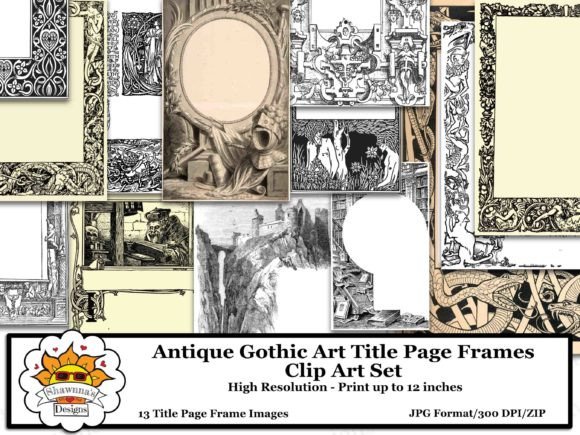
Antique Title Page Frames Clip Art Vol 2
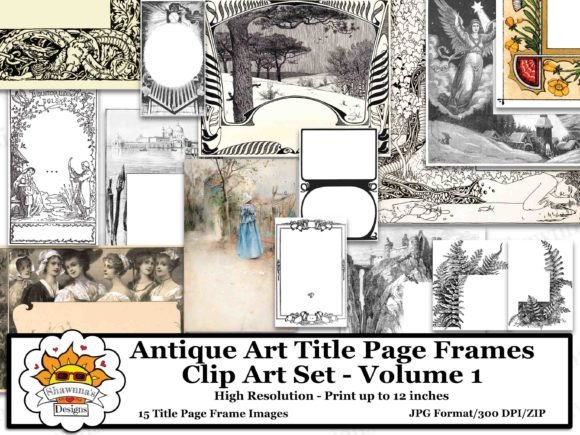
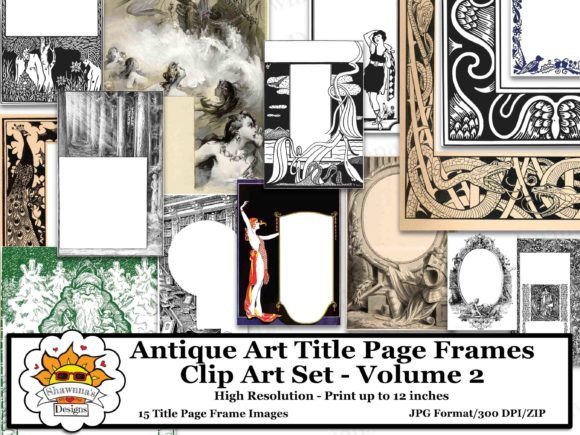
Every designer, crafter, and storyteller knows that the right frame can completely transform a project. It sets the mood before a single word is read and adds a layer of meaning that feels both deliberate and timeless. Antique Title Page Frames Clip Art Vol 2 delivers exactly that kind of impact through 15 carefully restored, high-resolution JPG images drawn from genuine public domain sources. All of them are over a century old, free from copyright, and ready for both personal and commercial work. What makes this collection stand out isn’t just the age of the artwork, but the thoughtfulness behind the curation. The creator has spent years digging through old books, magazines, ephemera, and antique shop finds to rescue these ornate title page frames from obscurity. Each one has been scanned, cleaned up, and enhanced into a modern format without stripping away the character only real history can provide.
Why Designers Return to Genuine Antique Assets
In a market saturated with digital art that can feel clean but lifeless, public domain antiques offer something rare: organic texture, hand-drawn line work, and the subtle imperfections that signal age. These title page frames are not recreations or vector approximations. They come from physical sources that carry the weight of ink on aged paper. Using them in a project adds immediate depth. A scrapbook page feels like a found heirloom. A book interior gains the gravitas of a centuries-old printing tradition. Even a social media graphic picks up a quiet elegance that stops a scroller in their tracks. The key is authenticity, and Antique Title Page Frames Clip Art Vol 2 preserves it without demanding that you master restoration tools yourself. The messy, time-consuming work of spotting stains, leveling contrast, and removing distracting artifacts has already been done. What you receive are clean, ready-to-use files that still feel genuinely old.
A Closer Look at the Collection
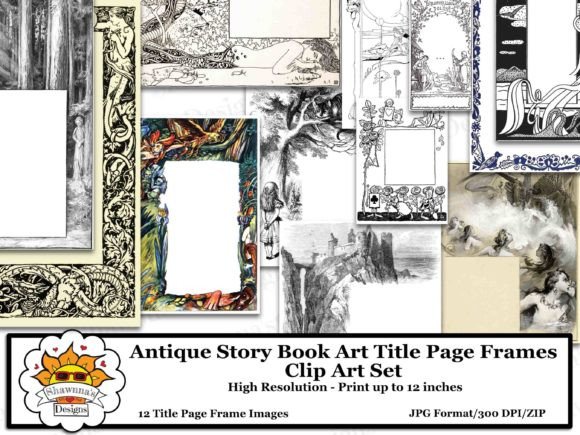
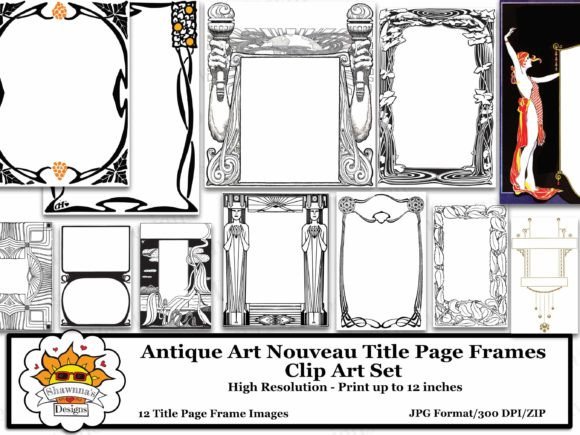
This volume includes 15 distinct title page frames, each delivered as a high-resolution JPG. While the exact styles vary—some feature delicate floral borders, others lean into architectural motifs with columns and arches, and a few embrace the kind of elaborate calligraphic cartouches found in 19th-century poetry books—the unifying thread is a sense of ceremony. These are frames meant to announce something important. They ask the viewer to pause and take notice. Because they are all drawn from the public domain, you’ll also find a welcome variety in era and design approach. A frame sourced from a Victorian novel’s title page will differ wildly from one that once surrounded a botanical plate or a sheet music cover. That range makes the set flexible enough to pair with many different project tones.
For anyone building a brand, a product line, or a creative series around a vintage aesthetic, having 15 options means you can rotate frames while maintaining visual consistency. The high resolution ensures they print cleanly even at larger sizes, so a frame that works on a 6×9 KDP cover will look just as crisp on a 12×12 scrapbook layout or a screen-printed fabric panel.
Practical Applications That Go Beyond the Obvious
It’s easy to list the standard uses—and we’ll get to those—but the real strength of Antique Title Page Frames Clip Art Vol 2 emerges when you think beyond the expected. Because these frames exist as digital JPG files with transparent intent (they are designed to hold text or other artwork inside), you can treat them as modular design elements, not just static borders.
KDP Interiors and Book Design That Feels Intentional
For self-publishers creating journals, workbooks, or literary fiction, the title page sets the reader’s first impression. A well-chosen antique frame immediately positions your book as something crafted rather than mass-produced. Use the frames on chapter headers, section dividers, or even as recurring decorative elements throughout the interior. Because the collection is commercial-use friendly, you can incorporate them into products you sell without additional licensing fees. One practical tip: when placing these frames in a KDP manuscript, test your layout with generous margins. Antique frames often have intricate edges that benefit from breathing room. Overcrowding them with text can diminish their impact. Instead, let the frame anchor a page with a single line of elegant type or a brief quote. The contrast between ornate border and minimal content creates a sophisticated, airy feel that readers associate with high-end design.
Scrapbooking and Junk Journaling with Historical Depth
Scrapbookers and junk journal artists thrive on layers. An antique title page frame becomes the perfect stage for a vintage photograph, a pressed flower, or a piece of handwritten ephemera. Because the frames are digital, you can resize them before printing to fit any page dimension—from a traveler’s notebook insert to a full 8.5×11 spread. For junk journals, consider printing the frames on tea-stained paper or lightweight vellum for an extra tactile quality. You can also use the frame as a stencil guide, tracing its edges before applying ink, embossing powder, or even stitching. The frame gives you a strong structural starting point, so each page builds outward from a cohesive center. Many crafters like to echo the same frame across multiple pages to create a visual rhythm. Volume 2’s 15 options let you pull that off without it feeling repetitive.
Branding and Marketing That Stands Apart
Small business owners and marketers often need to signal tradition, quality, or artisan values. A logo placed inside an antique title page frame instantly borrows the frame’s historical authority. Use it on product tags, hang cards, stationery, or website hero graphics. One approach: select a frame with simpler line work for the core brand mark, then reserve the more elaborate frames for seasonal promotions, certificates, or special announcements. That way the style stays connected to your identity without becoming monotonous. Because these frames are JPGs, they integrate seamlessly into Canva, Photoshop, or even Word documents. Even if you’re not a designer, you can layer them behind your text and adjust opacity to soften the effect. The high resolution means they won’t pixelate when printed on professional press stock.
Educators and Content Creators
Teachers building historical-themed lesson materials, YouTube creators designing thumbnail backdrops, or bloggers writing about classic literature will find these frames genuinely useful. They add visual credibility without requiring original artwork. A frame that once graced a 19th-century geology textbook can become the border for a modern infographic about earth science. The anachronistic fusion often captures attention more effectively than a perfectly period-correct reproduction because it feels creative rather than costume-like.
How to Keep Results Clear and Audience-Friendly
Working with antique clip art does require a few practical habits. First, always download the full-resolution file and scale down as needed rather than scaling up a small preview. This preserves the crisp detail of engraved lines and prevents muddy edges. Second, if you’re layering these frames over photographs or textured backgrounds, set the frame’s blending mode to Multiply or use a subtle color overlay so the black line art integrates naturally. A raw black frame on a bright white digital canvas can sometimes feel harsh; a slight warm tone—pulled from the image itself—can unify the scene.
When using these files commercially, pay attention to how the frame interacts with your brand’s core message. A rustic bakery might pair a floral frame with a modern sans-serif font for a charming contrast. A legal or historical consultancy might use an architectural frame with a classic serif typeface for a seamless, trustworthy look. The frame supports the message; it shouldn’t compete with it. Because you have 15 different frames, take the time to test two or three against your logo or headline before committing. Small shifts in border weight or ornament density can change the entire emotional register of a piece.
Organizing and Maintaining Originality Across Projects
A collection like Antique Title Page Frames Clip Art Vol 2 invites reuse, so a little organization goes a long way. Create a folder on your computer named by project type—such as “Book Covers,” “Journal Pages,” or “Social Templates”—and drop copies of the frames you use most into each. Don’t overwrite the originals. That way, you can experiment with tinting, cropping, or distressing a frame without losing the master file. Consistency across a series matters. If you’re publishing a trilogy of journals, using the same frame on all title pages—or a progression of three related frames—ties the products together in a customer’s mind. The same principle works for a line of greeting cards or a set of downloadable prints. The frames become part of your visual signature, yet because they are authentic antiques, they carry an originality that a purely digital template cannot replicate.
Bringing History Forward Without Losing Its Soul
The creator of this set has made it clear: these images were pulled from the depths of public domain archives, scanned from physical antiques, and digitally restored with a deep respect for their origins. What you’re investing in is not just a file download but the outcome of years of hunting, cleaning, and formatting. That effort means you can focus on the creative part—the arranging, the storytelling, the branding—instead of the technical grind of restoration. Each frame in Volume 2 represents a small piece of publishing history saved from obscurity. When you drop one into your next project, you’re connecting your modern work to a lineage of printers, illustrators, and designers who believed that words deserved a beautiful entrance. That’s not just practical. That’s something worth building on.
Whether you’re designing your next KDP bestseller, assembling a memory album for a loved one, or refreshing your brand’s visual identity, these 15 antique title page frames give you the structure to say something meaningful. Experiment freely, combine them with your unique content, and trust that the authenticity of a century-old border still has the power to make people pause, lean in, and pay attention.