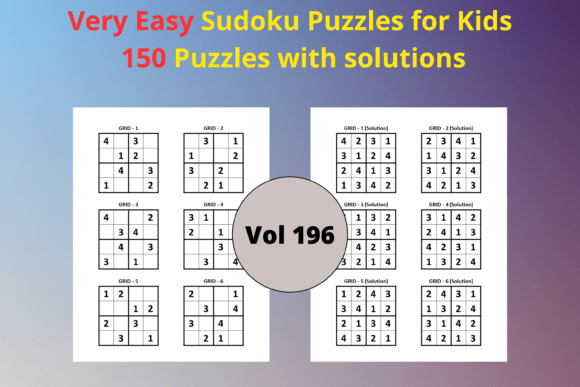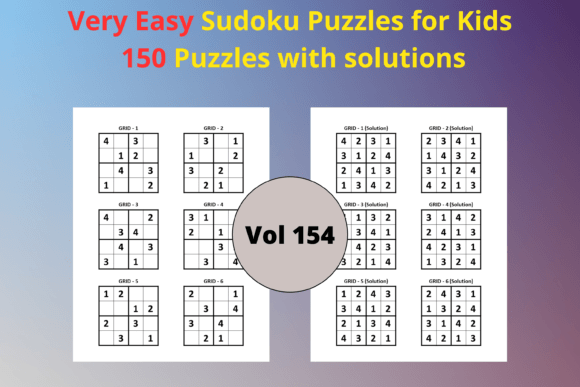
Very Easy Sudoku for Kids 154
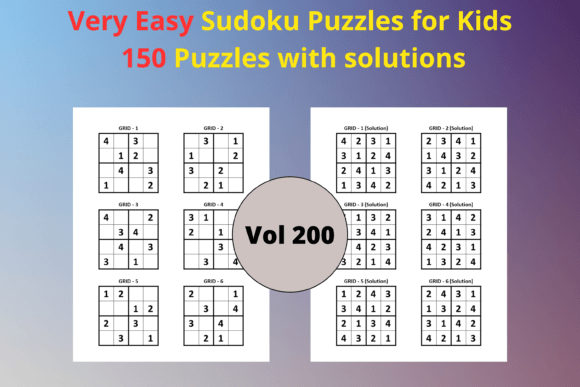
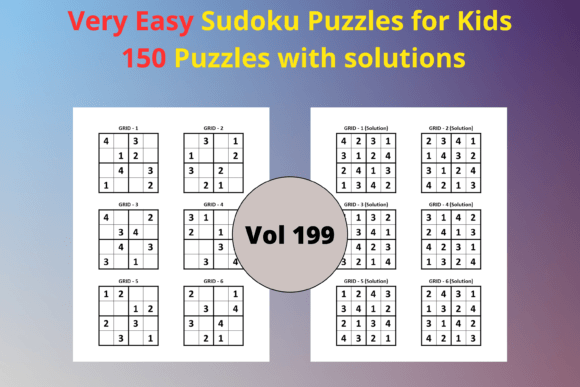
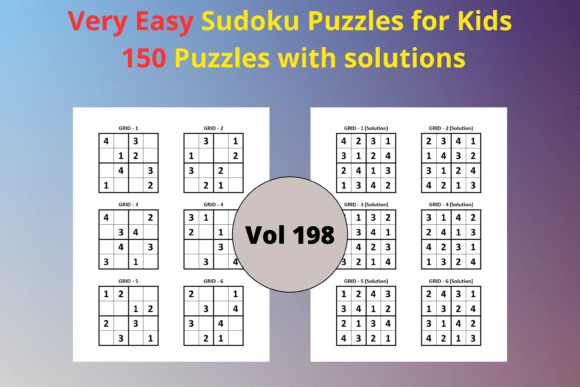
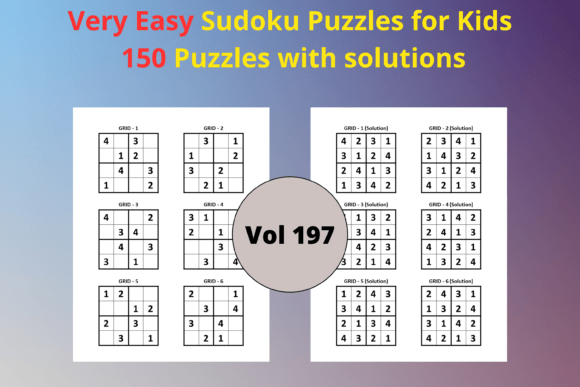
Finding a ready-made puzzle collection that children actually enjoy—and that creators can use without hours of layout work—is not always simple. The Very Easy Sudoku for Kids 154 pack provides a carefully assembled set of 150 different 4x4 Sudoku puzzles and their solutions, designed from the start to work as KDP interiors. Instead of starting from a blank page, you get a polished, print-ready PDF along with an editable PPTX file. Both are formatted to a standard 8.5 x 11 inch page, which means no resizing struggles and no last-minute formatting surprises when you upload to a publishing platform or send files to a local printer.
What sets this collection apart is its clear focus on a very easy difficulty level. Every puzzle uses a 4x4 grid, so the logic requires only the numbers 1 through 4. For a child who has never tried Sudoku before, this eliminates the intimidation that a 6x6 or 9x9 grid can bring. The rules stay simple: each row, column, and 2x2 block must contain the numbers 1, 2, 3, and 4 exactly once. Because the puzzles are extremely gentle, kids can solve them quickly and build confidence without heavy adult guidance. This sense of early success often makes the difference between a child who wants to do “just one more” and one who pushes the page away.
Why the 4x4 Grid Works So Well for First-Time Solvers
A 4x4 Sudoku puzzle may look almost too easy to an adult, but for a five- or six-year-old, matching four numbers across rows and columns is genuine mental exercise. Working through these puzzles helps young minds practice pattern recognition, focused attention, and early logical reasoning. Because each puzzle in this pack stays at the very easy level, the learning curve is almost flat. A child can move from one page to the next without suddenly hitting a wall of difficulty that spoils the fun.
Beyond logic skills, completing a 4x4 grid also supports fine motor development. When a child picks up a pencil and carefully writes a number inside a small square, they are practicing the hand control needed for clearer handwriting. Teachers and parents often notice that puzzle pages like these can hold attention longer than basic tracing exercises, because the activity feels more like a game than a lesson. The solutions included at the back of the pack serve a dual purpose: children can self-check their work, and adults have an instant answer key if they want to guide a child who feels stuck.
Saving Time for Publishers, Educators, and Creative Entrepreneurs
If you have ever tried to create a children’s activity book from scratch, you know that puzzle layout is one of those tasks that quietly eats up an afternoon. Aligning grids, choosing fonts that are easy for young readers, making sure answer pages correspond correctly to puzzle pages—these details matter. The Very Easy Sudoku for Kids 154 pack hands over a finished interior file so you can skip that entire process. Because the PDF is ready to upload as a KDP interior, you can focus your time on designing a cover, writing a description, or planning your next book instead of formatting puzzles.
The editable PPTX file adds flexibility that a static PDF alone does not offer. Suppose you want to add your own branding, insert a personalized message at the front of the book, or combine these Sudoku pages with other activity types like mazes or coloring pages. With the PowerPoint file, you can move pages, adjust margins slightly, or change fonts to match a specific series look. This is especially useful for creators who build themed activity books—a dinosaur-themed book, for example, might use a playful font and include a few dino facts between puzzle sections. The PPTX file makes such customizations straightforward without requiring advanced design software.
Practical Ways Different People Use This Puzzle Pack
The obvious use case is a low-content or medium-content KDP publisher who wants to offer a children’s Sudoku book. With 150 unique puzzles and 150 solution pages, the interior provides enough volume for a satisfying book that customers perceive as good value. Since every puzzle is different, there is no filler repetition that might lead to negative reviews. The very easy level communicates exactly who the book is for, helping the right customers find it without guesswork.
Teachers and homeschooling parents often adapt these pages for small-group work or independent quiet time. A teacher might print a handful of puzzles for a math center rotation, while a parent might keep a few sheets in a travel binder for long car rides. Because the grids are uncluttered and the numbers are large, children with developing vision or attention challenges can engage without unnecessary strain. Occupational therapists sometimes incorporate simple Sudoku into sessions that target planning and sequencing, and a very easy 4x4 grid is an appropriate starting point for many clients.
Children’s librarians and activity coordinators also find value in quick-to-print puzzle sheets. For a library puzzle hour or a waiting-room activity cart, having a digital file on hand means you can print exactly what you need, when you need it, without storing stacks of physical books. The 8.5 x 11 inch format is compatible with any standard home or office printer, so you do not need special paper or equipment.
How This Collection Supports Early Childhood Development Goals
When a young child solves a Sudoku puzzle, the benefits extend beyond the immediate joy of finishing the page. Little by little, they learn to scan a grid, notice what is missing, and eliminate possibilities—the very foundation of logical deduction. The very easy level ensures that the cognitive load stays manageable. A child might start by finding the row that has three numbers already filled in and realizing the fourth number is the only one left. That small victory reinforces an early understanding of cause and effect.
For parents who are mindful about screen time, printed puzzles offer a tangible, screen-free alternative that still feels like play. Unlike apps that flash bright animations, paper puzzles encourage a child to sit still and concentrate on a single task. This may help cultivate a longer attention span in a world where quick digital interactions are the norm. Because the pack includes 150 puzzles, it provides enough variety to last many sessions without becoming repetitive. A child might do one puzzle after breakfast, another while waiting for dinner, and slowly build a habit of calm, focused activity.
What the Editable Format Means for Long-Term Use
A common frustration with fixed PDF activity pages is that once you print them, that is all you have. With the editable PPTX file in this pack, you gain the ability to repurpose the puzzles for different formats. Maybe you want to create a half-page booklet, enlarge the grids for a magnetic board game, or extract a few puzzles for a newsletter or a classroom handout. The editable nature means you are not locked into a single presentation style.
For individuals who sell printable resources on marketplaces other than Amazon, the PPTX file makes it easier to adapt the puzzles to a different copyright page or disclosure statement. You can also add a clickable table of contents if you plan to sell the file as a digital download. While the PDF is ready to upload as-is, having the editable version in your toolkit gives you room to grow and experiment without needing to rebuild the puzzles from scratch.
Points to Consider Before Using This Pack
Because the puzzles are specifically designed as very easy 4x4 Sudoku, they are not the best fit for children who are already comfortable with larger grids. A seven- or eight-year-old who has solved dozens of 6x6 puzzles might find these too simple and complete them very quickly. The value for such a child would be limited unless you plan to use the pages as a warm-up or as part of a mixed difficulty book. The pack works best when the end user is truly a beginner—typically ages 4 to 7, or older children with special learning needs who benefit from the simplest introduction to Sudoku.
Also, while 150 puzzles sounds like a generous amount, in a printed book the number of pages doubles because each puzzle has a matching solution page. If you want a slimmer book, the editable PPTX allows you to reduce the page count. Conversely, if you want a thicker book, you might combine this pack with other activities. It is worth thinking through the final page count and how it aligns with your target book size and printing cost before uploading to any on-demand platform.
Making the Most of the Ready-to-Upload PDF
For those who do not need to change a single element, the PDF file is genuinely ready. You can upload it directly as a KDP interior, and the margins, bleed settings, and font sizing are already taken care of. This is a significant advantage for anyone who has struggled with KDP’s formatting requirements. Many independent publishers lose time troubleshooting margin errors or image resolution warnings. With a file built specifically for 8.5 x 11 inch trim size, those headaches are largely removed.
When preparing to publish, you might consider wrapping the interior with a cover that clearly signals “very easy” and “for kids,” since the title and cover design heavily influence discoverability. Parents searching for “easy Sudoku for 5 year olds” or “beginner puzzle book for kids” will respond to visuals and keywords that match their expectations. Because the interior content truly matches the very easy promise, your customer satisfaction rate is likely to benefit from this alignment between marketing and content.
A Thoughtful Addition to Any Activity Library
Whether you are assembling your first children’s puzzle book, refreshing classroom materials, or building a library of editable resources, the Very Easy Sudoku for Kids 154 pack offers a straightforward, time-saving solution. The combination of 150 distinct puzzles, matching solutions, dual file formats, and a focus on the gentlest difficulty level gives you a flexible base from which to work. It respects the attention span of the youngest solvers and the practical needs of the adults who create, teach, and publish.
The true measure of a puzzle collection is how often it gets used. A 4x4 Sudoku that a child can finish with a smile is likely to be reached for again and again. By removing unnecessary complexity from both the puzzles and the production process, this pack helps that happen more often—quietly, simply, and reliably.