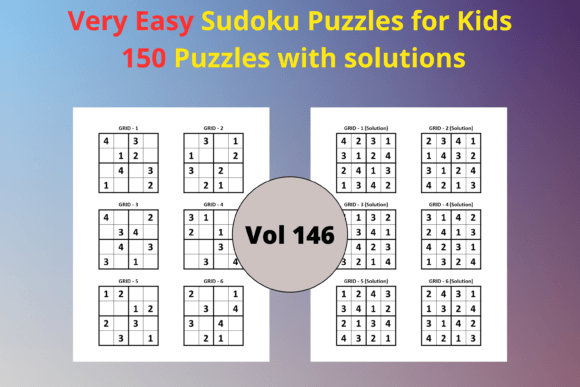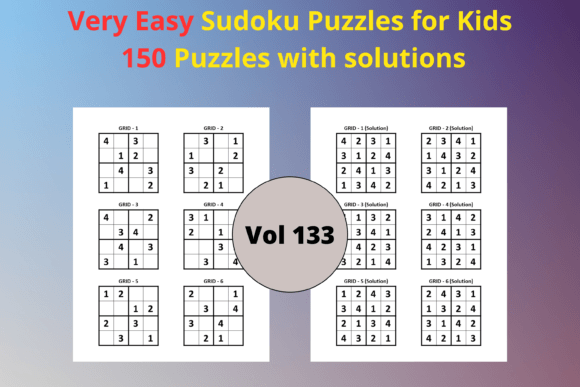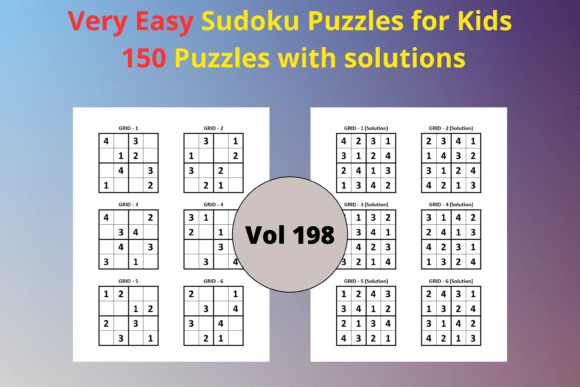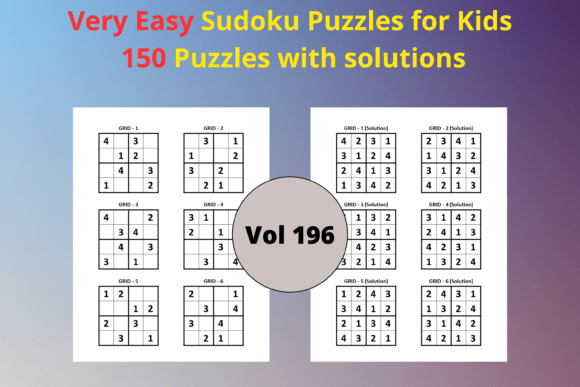
Very Easy Sudoku for Kids 143: 150 Fun Puzzles & Solutions
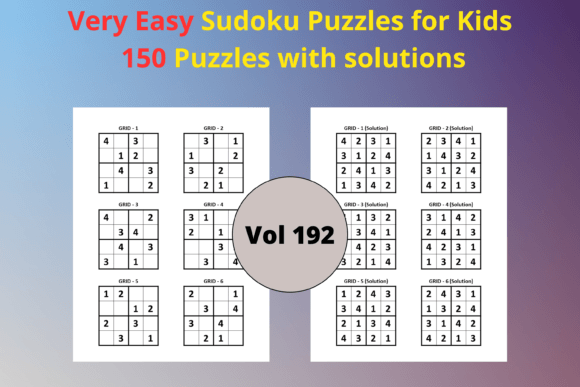
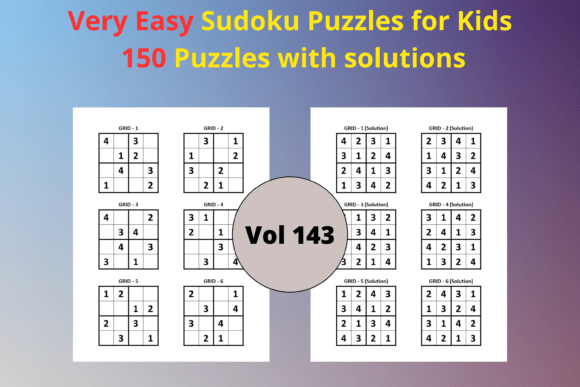
When you hand a child their first Sudoku puzzle, something small but important happens. The grid is simple, the numbers are few, and the rules are clear. Yet inside that 4x4 square, a young mind starts to connect patterns, test possibilities, and discover the quiet thrill of getting it right. Very Easy Sudoku for Kids 143 isn't just a collection of puzzles—it's a launchpad for confidence, logic, and screen-free focus. This pack delivers 150 very easy 4x4 Sudoku puzzles, each paired with its solution, all formatted as ready-to-upload KDP interiors. And because it comes with both a polished PDF and an editable PPTX file, you can use it as-is or shape it into something entirely your own.
What Makes These Very Easy Sudoku Puzzles So Useful
Many puzzle books for children either lean too hard into complexity or rely on flashy distractions that dilute the educational value. Here, every grid has just four rows and four columns, with four 2x2 blocks. That deliberate restraint matters. A 4x4 Sudoku teaches the core mechanics—each row, column, and block must contain the numbers 1 through 4 exactly once—without overwhelming a beginner. The pack's very easy designation means fewer gaps to fill, so a child can complete a puzzle in minutes. That speed builds momentum. A kid who solves one naturally reaches for the next.
The real power lies in the volume. 150 puzzles turn a single purchase into a month-long daily habit, a vacation road-trip companion, or a classroom resource that can serve an entire year. Because each puzzle has a matching solution, parents and teachers never need to second-guess an answer, and older kids can self-check their work, which reinforces independent learning.
Creative Ways to Put the 150-Puzzle Pack to Work
Thinking about how to use these interiors opens up a surprisingly wide range of possibilities. The obvious path is a standalone activity book for ages 4–8, but that's just the start. Here are a few practical angles that different creators and educators can adapt.
1. Build a Mixed Activity Book for a Richer Product
Combine the Sudoku grids with coloring pages, dot-to-dots, or simple mazes. Since the PPTX file is fully editable, you can intersperse other activities between puzzles, creating a single PDF that feels like a curated journey rather than a repetitive drill. A designer might add illustrated animals in the margins that children can color after solving each puzzle, tying the logical challenge to a creative reward.
2. Themed Variations for Specific Audiences
The editable format lets you swap numbers for symbols, letters, or even emojis. For a dinosaur-themed puzzle book, replace 1, 2, 3, 4 with four different dinosaur icons. For a space theme, use planets or stars. This small shift makes the same logic activity feel brand new and can help nonverbal children or those just learning numbers still benefit from the pattern recognition. The 150 grids become an instantly reusable template for multiple niche products.
3. Classroom and Therapy Tools
Educators and therapists often need quick, calming activities that also exercise executive function. Print a stack of these puzzles for early finishers, morning warm-ups, or brain breaks. Because the difficulty is consistent and very easy, no child feels left behind. An occupational therapist might laminate the pages and use dry-erase markers for repeated practice, building fine motor control alongside logical reasoning. The Very Easy Sudoku for Kids 143 pack becomes a reusable resource that adapts to different settings without extra design work.
4. Digital and Printable Versions for Different Platforms
With the PDF ready to upload, you can publish a KDP paperback in hours. But don't stop there. Extract individual puzzles to create a members-only printable library on your blog, a lead magnet for an email list, or a series of Instagram story challenges that parents can screenshot and solve with their kids. The PPTX can be converted to Google Slides for interactive virtual classrooms, letting children drag and drop numbers or symbols into the grid during live lessons.
Customizing Your Sudoku Book with the Editable PPTX
The included PPTX file is where things get genuinely interesting for designers and entrepreneurs. Rather than starting from scratch, you open a fully structured document—150 puzzles on one set of slides, 150 solutions on another—and you can immediately adjust fonts, colors, borders, and instructions. That flexibility encourages brand consistency. Add your logo, pick a warm pastel palette, or create a character guide that walks the child through each level.
A practical approach: keep the puzzle structure intact but redesign the header and footer. One version might frame each page as a "Mission" with a secret agent theme, while another uses a gentle garden motif. Because the Sudoku grids themselves don't change, you can experiment with multiple visual styles and A/B test which ones resonate with your audience on Amazon or Etsy. The editable format also means you can localize the instructions into different languages, opening up markets where children's activity books are underserved.
Designing a Kid-Friendly Puzzle Page That Works
When you lay out these puzzles, clarity beats cleverness. Young solvers need to see the grid without squinting. Use generous whitespace around each 4x4 square so that numbers sit comfortably inside large cells. Font choice matters too: rounded, sans-serif numerals are easier for early learners to recognize than ornate serifs. The PDF already follows a clean, print-ready layout, but when editing the PPTX, stick to these principles.
Contrast is critical. A light cream or white background with dark, crisp numbers prevents eye fatigue. If you introduce color, use it sparingly—perhaps to outline the 2x2 blocks with a faint border—so that the puzzle remains the focus. Solutions pages should be clearly separate, placed at the back of the book, and marked with a different header or a simple icon so that children know when they've reached the answers. This structure respects the child's process and keeps the book organized for parents who want to tear out solution pages if needed.
From One Pack to a Whole Puzzle Series
Once you've published a book using the Very Easy Sudoku for Kids 143 interiors, you have a tested template. The next logical step is to create a slightly harder version—still 4x4, but with fewer given numbers—or a themed series that moves from very easy to easy across multiple volumes. Because you've already handled the layout and style decisions, each new pack can share the same branding, building a recognizable series on Amazon's marketplace.
This approach also works for holiday-specific editions. Imagine a Valentine's Day puzzle book where hearts replace numbers, a Halloween version with pumpkins and ghosts, or a back-to-school workbook that teachers can recommend to parents in August. The editable source file makes seasonal adaptation nearly effortless. You're not redesigning from scratch; you're swapping thematic elements while keeping the proven puzzle logic intact. Over time, a single purchase of this pack can yield multiple revenue streams across different niches.
Why Ready-to-Upload Interiors Save You Real Time
For KDP publishers and small business owners, time is a design asset. Creating 150 unique Sudoku grids by hand, checking each solution, and formatting them for 8.5 x 11 inch trim size takes hours—often days—before you even think about cover design. With this pack, the heavy lifting is done. The PDF passes KDP's print requirements, so you can upload directly, preview, and order a proof copy within an afternoon. That speed means you can test a new product idea quickly, learn from customer feedback, and iterate without the sunk cost of a lengthy design phase.
The editable PPTX adds another layer of flexibility. If you find that your audience responds better to puzzles that use letters instead of numbers, you can make that change globally across all 150 pages in minutes. If a reviewer suggests larger font sizes for older adults using the book with grandchildren, you can adjust and republish. This adaptability is what separates a static product from a genuinely useful tool that grows with your publishing goals.
Helping Kids Learn Without Realizing It
Finally, it's worth noting what happens when a child consistently works through these puzzles. The cognitive benefits—improved working memory, pattern recognition, and logical sequencing—are well documented. But there's a quieter outcome: sustained attention without a screen. In a world where so many children's activities compete with animations and sound effects, a simple pencil-and-paper Sudoku grid demands a different kind of presence. The "very easy" level ensures that demand is never frustrating; it's just challenging enough to hold interest while building the foundational skills that harder puzzles will later require.
For parents, that translates into peaceful moments. For educators, it's a reliable classroom tool. For publishers, it's a product with genuine utility. And for the child who places that final number correctly and looks up with a grin, it's proof that they can solve something on their own—one small grid at a time.