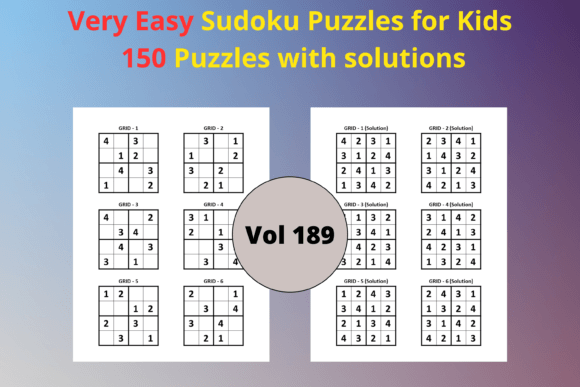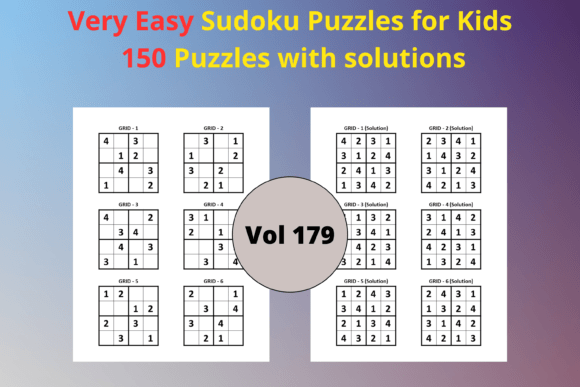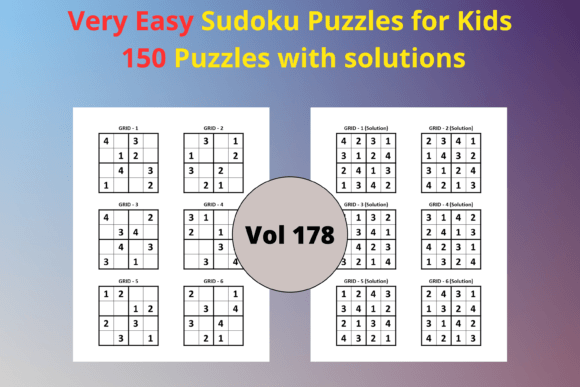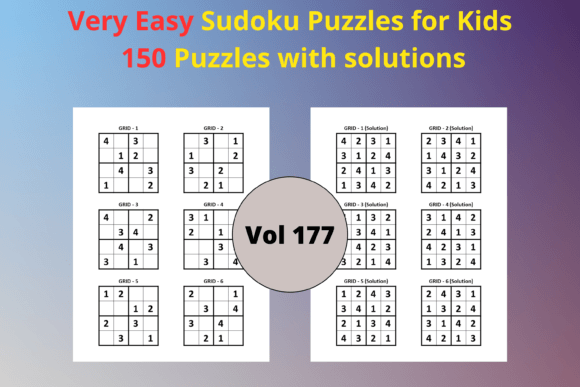
How Very Easy Sudoku for Kids 134 Gives Children a Fun Start in Logic While Saving Adults Time
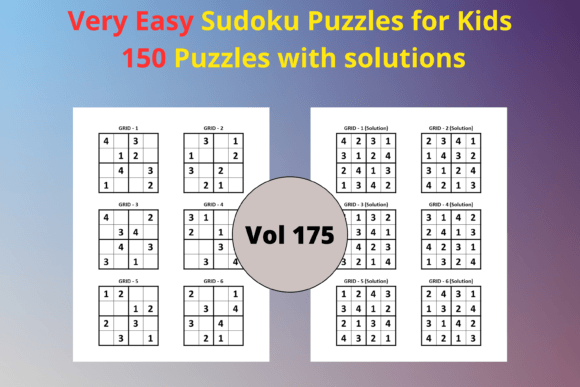
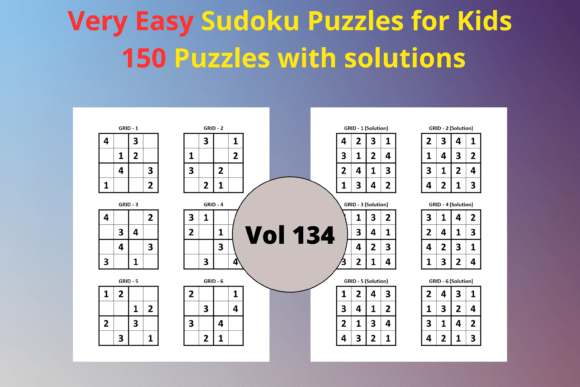
Finding the right puzzle book for a young child can be surprisingly tricky. Most Sudoku grids are too large, the rules feel confusing, and frustration takes over before the first game ends. That is why a well-designed, printable collection like Very Easy Sudoku for Kids 134 makes such a difference. It gives you 150 very easy 4×4 Sudoku puzzles with full solutions, all sized to a standard 8.5×11 inch page and delivered as a ready-to-upload PDF and editable PPTX file. Whether you are a parent wanting to share a quiet brain-building activity, a teacher stocking your classroom resource shelf, or a KDP publisher looking for a complete interior to launch a kids' puzzle book, this single pack answers several needs at once.
What Very Easy Sudoku for Kids 134 Actually Contains
At its core, Very Easy Sudoku for Kids 134 is a high-quality puzzle interior designed for immediate use. The set includes 150 unique 4×4 Sudoku puzzles, each one carefully created at a very easy difficulty level. Every puzzle comes with a matching solution page, making it simple to check answers or provide gentle hints. The material is provided as both a print-ready PDF and an editable PPTX file. The pages are formatted at 8.5×11 inches, the ideal trim size for most home printers and Amazon KDP paperback books. This means you can print a few sheets for a quiet afternoon, bind a full workbook, or upload directly to a self-publishing platform without any extra layout work.
Why Very Easy Sudoku Matters for Young Learners
Children as young as four or five can benefit from simple Sudoku, but only if the grid matches their developmental stage. A standard 9×9 board is overwhelming. A 4×4 grid, using numbers 1 through 4, is the perfect entry point. It teaches the core mechanics—each row, column, and 2×2 block must contain each number once—without demanding advanced counting or prolonged focus.
Working through Very Easy Sudoku for Kids 134 helps young minds develop several skills at once:
- Logical reasoning: Children learn to make decisions based on what is already on the board, not on guesses.
- Pattern recognition: Spotting which number is missing in a row or block strengthens visual discrimination, a skill that supports reading and math.
- Patience and persistence: Because these puzzles are very easy, kids experience quick wins that build confidence and a willingness to try slightly harder challenges later.
- Number familiarity: Using digits 1–4 over and over cements early numeral recognition in a low-pressure way.
Many parents report that after a few weeks with very easy 4×4 Sudoku, their children start to approach other problems more methodically. The habit of scanning, asking “what’s missing?” and testing possibilities transfers to everyday situations.
Overcoming Common Challenges with Kids’ Puzzle Activities
Adults often want to introduce puzzles but hit the same roadblocks: the puzzles are too hard, the child loses interest quickly, or there is not enough variety to sustain a routine. A book with only twenty puzzles gets repetitive fast. Too many difficult puzzles and the child feels defeated.
Very Easy Sudoku for Kids 134 directly addresses these issues. The “very easy” label is genuine—many grids have only a handful of empty cells, so a child can finish in a couple of minutes and feel a genuine sense of accomplishment. With 150 puzzles, there is more than enough material to last through several months of daily practice, a whole school term, or to rotate among a classroom of students without repeating puzzles too soon. The large 8.5×11 inch format also gives small hands plenty of room to write numbers without cramping, reducing motor fatigue.
Who Uses Very Easy Sudoku for Kids 134 and How They Approach It
Different people come to this resource with different goals, and the pack serves all of them well. Understanding these distinct approaches helps you decide how to get the most value.
Parents Looking for Screen-Free Activities
You want something educational that does not involve a tablet or TV. You download the PDF, print a few puzzles, and present them as a special “big kid” challenge. The solutions let you check the work quickly. Some parents print and laminate several sheets so their child can use dry-erase markers and replay favorites—a tip that works especially well for children who enjoy repetition.
Teachers and Homeschool Educators
For a classroom teacher, having a bank of 150 ready-to-go logic puzzles saves hours of searching and formatting. You can use them as morning warm-ups, math center activities, or calm-down tasks after recess. Because the PPTX file is editable, you can adjust the font or add your own instructions in the child’s home language. The very easy level ensures that even students who struggle with math can participate and feel successful, which builds a positive attitude toward problem solving.
KDP Publishers and Content Creators
If you publish activity books on Amazon KDP, you know how time-consuming it is to design puzzles from scratch. Very Easy Sudoku for Kids 134 provides the interior you need in a few minutes. The PDF is already formatted to KDP’s preferred dimensions and includes centered, clean pages with solutions at the back. The PPTX allows you to brand the pages, add a title page, or mix these puzzles with other content like coloring pages or simple mazes to create a unique book. You can upload the files directly, set your price, and publish a professional-quality kids’ Sudoku book without hiring a designer.
Practical Applications That Deliver Real Outcomes
The value of this puzzle pack becomes clear when you put it to use. Here are concrete ways different users integrate Very Easy Sudoku for Kids 134 into their daily routines or publishing plans, along with the results they can expect.
- Morning brain warm-up: A parent prints one puzzle each morning and leaves it at the breakfast table. The child completes it while eating, starting the day with a quick win and a focused mindset.
- Travel and waiting activities: A clutch of printed sheets inside a restaurant busy bag or a road trip binder keeps children engaged without screens. Because the puzzles are short, they fit naturally into small pockets of time.
- Classroom differentiation: A teacher uses the editable file to create three levels of challenge from the same base puzzles by slightly adjusting the number of given clues. This allows students at different levels to work on the same skill without singling anyone out.
- KDP niche book creation: An author combines the 150 puzzles with a custom cover targeting a specific theme—underwater animals, dinosaurs, unicorns—and publishes a themed Sudoku book for kids. The included solutions add perceived value and reduce refunds from customers who expect answer keys.
- Therapy and cognitive support: Occupational therapists sometimes use simple Sudoku to help children with attention challenges practice sustained focus and task completion. The very easy level minimizes anxiety and maximizes engagement.
What Sets This Resource Apart
There are many puzzle collections available, but few are built with the specific needs of both children and adult publishers in mind. Very Easy Sudoku for Kids 134 stands out because of its thoughtful design choices:
- 150 puzzles, 150 solutions: The one-to-one pairing means every puzzle has its own dedicated solution page, which is far more user-friendly than crammed answer keys at the end of a book.
- True 4×4 simplicity: The grids use only the numbers 1 through 4, so even pre-readers who recognize numerals can participate. The very easy difficulty means most puzzles have enough filled cells to guide a child naturally toward the solution.
- Print-ready and editable formats: The PDF ensures hassle-free printing, while the PPTX gives you the flexibility to customize. Whether you want to add a child’s name to each page or adjust the layout for a different book size, you have the source file to work with.
- Standard 8.5×11 inch pages: This trim size is the most common for KDP interiors and home printers. No need to worry about scaling or awkward margins.
Recommendations for Getting the Most from These Puzzles
To turn a good product into a great experience, a little planning goes a long way. Based on feedback from parents, teachers, and publishers, here are some practical suggestions:
- Start with a joint activity. Before handing over the first sheet, solve one puzzle together. Say your thought process aloud: “I see three numbers in this row. Which number is missing? Let's check the column too.” This models the logic and reduces confusion.
- Celebrate completion. For young children, finishing even a very easy puzzle is an achievement. A simple sticker on the page builds motivation without pressure.
- Space out the puzzles. With 150 puzzles available, resist the urge to offer too many at once. One or two a day keeps the activity fresh and prevents burnout. This also stretches the value of the pack over many months.
- Use the solutions wisely. The solution pages are not just answer keys for adults. When a child gets stuck, you can show only the relevant part of the solution to give a clue without revealing the entire puzzle. This preserves the problem-solving experience.
- For KDP publishers, bundle thoughtfully. If you plan to publish this interior as a book, consider adding a few introductory pages explaining how Sudoku works for parents. The editable PPTX makes it easy to insert these without affecting the puzzle layout. Also, pay attention to the bleed settings in KDP; since the file is already 8.5×11 inches, you can publish without adding interior margins if your cover accounts for trim.
- Reuse through lamination. Parents and teachers often print a set and laminate the pages. Children can write with washable markers, and puzzles can be wiped clean and reused. This is especially useful in classrooms with limited printing budgets.
These small adaptations transform Very Easy Sudoku for Kids 134 from a static set of puzzles into a dynamic tool that fits seamlessly into your day.
The Long-Term Benefits of Early Logic Play
When a young child regularly engages with very easy Sudoku, the benefits extend far beyond the puzzle page. The ability to hold a small goal in mind—complete this grid—while filtering out irrelevant information builds executive function skills. As children progress, they naturally start to scan more efficiently, hold multiple possibilities in working memory, and check their own work for mistakes. These are the same cognitive muscles required for reading comprehension, math problem solving, and even social reasoning. The gentle ramp from very easy to slightly harder challenges, made possible by the sheer quantity of puzzles in this pack, provides a natural learning progression without any need for formal instruction.
For publishers, the advantage is equally straightforward: a product that genuinely helps children and saves parents time is a product that earns positive reviews and repeat customers. A well-made Sudoku interior positions your KDP catalog as a trustworthy source of quality educational materials.
Very Easy Sudoku for Kids 134 is not just a collection of numbers in boxes. It is a ready-to-use solution that supports early learning, simplifies life for busy adults, and opens up publishing opportunities with minimal effort. Whether you print a single page for your kitchen table or upload an entire book to Amazon, the outcome is the same: easily accessible, confidence-building logic play that works.