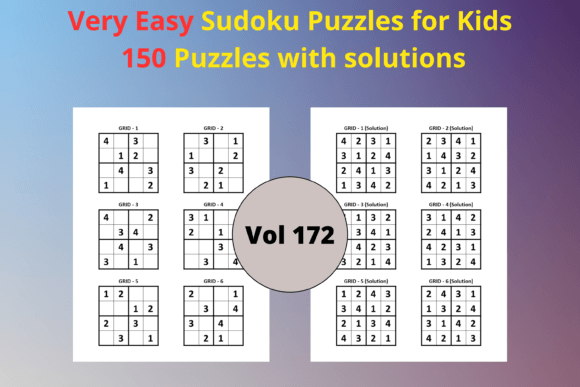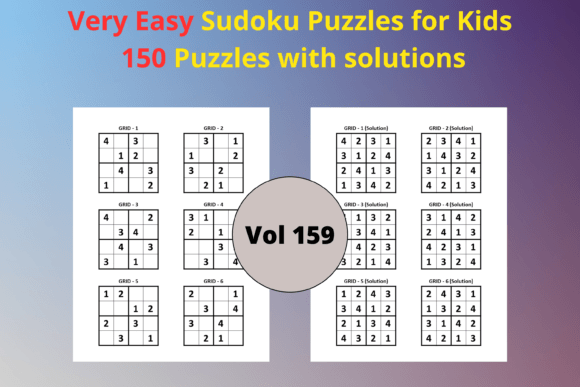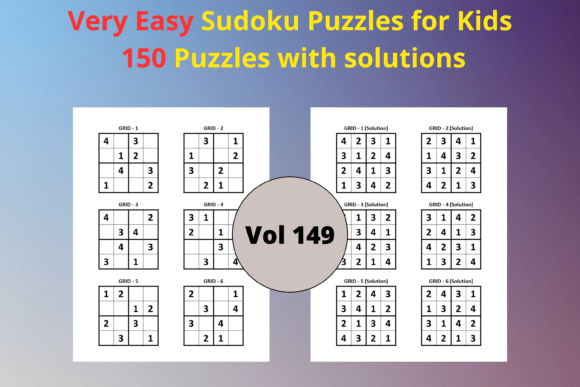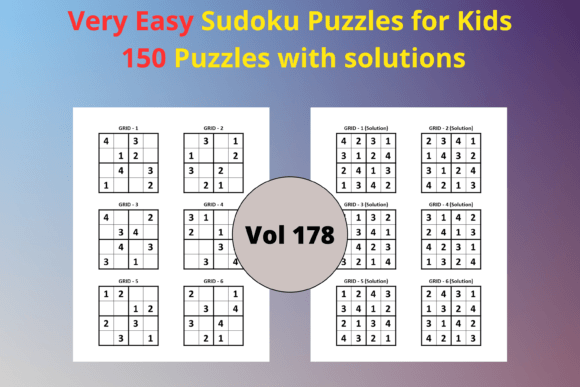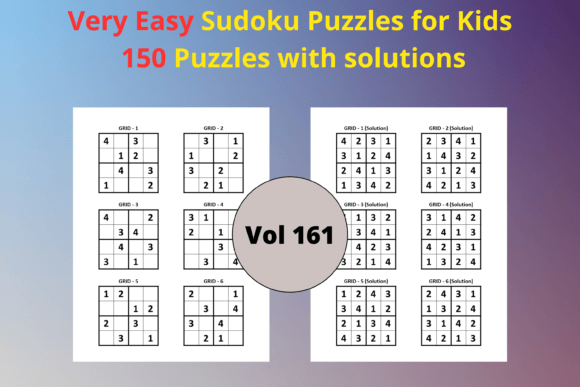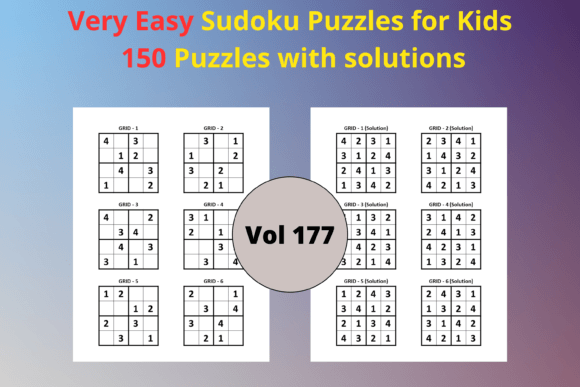
Creating Engaging Children's Activity Books with Very Easy Sudoku for Kids 177
When you sit down to build a children's activity book, the puzzle selection makes or breaks the final product. Very Easy Sudoku for Kids 177 represents a specific approach to puzzle design that prioritizes accessibility for young solvers. This isn't about creating the hardest challenge possible. It's about matching difficulty to developmental stage so that a four-year-old or a first-time puzzle solver experiences success, not frustration.
For KDP publishers, educators assembling classroom materials, or parents putting together summer learning packets, the decision to use very easy 4x4 Sudoku grids carries implications that ripple through the entire project. The 150-puzzle pack with matching solutions, delivered in both PDF and editable PPTX formats at 8.5 x 11 inches, transforms what could be hours of puzzle creation into a straightforward implementation step.
Understanding Where Very Easy Sudoku for Kids Fits in Your Publishing Pipeline
Puzzle books move through distinct phases from concept to customer. There's the planning stage where you decide on themes, age ranges, and interior structure. Then comes asset collection or creation. After that, layout and formatting. Finally, review, export, and upload. Very Easy Sudoku for Kids 177 lands squarely in the asset stage, but your choice here affects everything downstream.
If you decide to generate puzzles yourself using a spreadsheet or an online tool, you introduce time you cannot recoup. Each puzzle needs verification. Solutions must match. Formatting must be consistent across 150 grids. A pre-built pack eliminates those steps. The PDF arrives print-ready, and the PPTX file lets you add branding elements, page numbers, or decorative frames without rebuilding the underlying puzzle data.
This matters most when you're operating on a publishing schedule where you plan to release multiple books per quarter. The time saved on puzzle creation shifts directly into marketing, cover design, or starting the next project. For educators and parents, that same time shifts into actual instruction or one-on-one time with the child.
What Makes the 4x4 Grid the Right Starting Point
A 4x4 Sudoku grid uses four rows, four columns, and four 2x2 subgrids. The solver places numbers 1 through 4 so that each row, column, and subgrid contains each digit exactly once. In a standard 9x9 puzzle, even easy versions ask the solver to hold multiple constraints in working memory. A 4x4 grid, by contrast, keeps the cognitive load manageable. A child can scan a row, spot the missing number, and feel the satisfaction of a completed puzzle within two to three minutes.
This pacing matters. When a puzzle pack labels itself "very easy" and delivers on that promise consistently, it builds confidence. A child who finishes ten puzzles in one sitting is far more likely to ask for another activity book than one who hit a wall on puzzle three. From a product design standpoint, 150 puzzles create enough volume for weeks of daily use without becoming a one-and-done item that gets tossed aside after a single afternoon.
- Short solve times keep attention spans from drifting
- Predictable difficulty encourages independent solving
- High puzzle count stretches value across repeat use
- Consistent formatting reduces visual distraction
Integrating the Puzzle Pack into Different Workflows
The way you use Very Easy Sudoku for Kids 177 depends heavily on your end goal. Let's walk through how different users bring this asset into their process.
For KDP Publishers Building a Catalog
You likely have a template for your interiors already. Maybe you use a specific font pairing, a header style, or decorative corner elements that tie your brand together across multiple puzzle books. The PPTX file becomes your working document here. You open it in PowerPoint or Google Slides, apply your template's master slide or manually drop in your branding elements, and export to PDF for upload. The puzzle data itself doesn't change. Your only concern is visual presentation and making sure the solutions section is clearly separated from the puzzle section.
Some publishers place one puzzle per page with large numbers and plenty of white space for young solvers who are still developing fine motor control. Others place two puzzles per page to keep page count and printing costs lower. Because the source file is editable, you can make that decision without altering the puzzle content. If you're publishing a series with progressive difficulty, this very easy volume anchors the entry point of your funnel, and the pack's consistent formatting makes it easy to maintain visual continuity across volumes.
For Educators and Classroom Use
Teachers rarely have time to reformat puzzle books. They need materials that print clearly on school copiers, work in black and white as well as color, and can be handed out without additional prep. The 8.5 x 11 inch size matches standard letter paper, so there's no resizing or margin adjustment needed. If you're assembling a math center rotation, you can print a subset of puzzles each week, keep the solutions in a binder for self-checking, and let students progress at their own pace.
An approach that works well in classrooms is to print four puzzles per page in landscape orientation for a warm-up activity, then use the full-page version for independent work or early finisher packets. The editable PPTX gives you the flexibility to make those layout adjustments in minutes rather than reconstructing grids manually.
For Parents and Homeschool Organizers
Home use often means printing on demand. You might print five puzzles at a time, staple them into a booklet, and pull the next batch when those are done. The PDF's clean layout means you don't waste ink on unnecessary graphics. The solutions at the back of the pack let a child check their own work, which builds metacognitive habits. You might also laminate a few pages for dry-erase use if you want to reuse the same puzzles across multiple children or multiple attempts.
Ensuring Quality Control Across 150 Puzzles
One of the underappreciated aspects of using a pre-made puzzle pack is that the quality control burden shifts from you to the creator. When you generate puzzles programmatically, you need to verify that each one has a unique solution and that no transcription errors crept in during formatting. A pack that arrives with puzzles and solutions already paired eliminates verification time.
That said, you should still do a spot check. Pick a random sample of ten puzzles from the front, middle, and back of the pack. Solve them or check them against the provided solutions. This isn't about distrusting the source. It's about catching any file corruption or conversion issues that might have occurred during download or transfer. A five-minute check prevents a negative review from a parent who found an unsolvable puzzle on page 47.
Organizing Projects for Long-Term Reusability
If you plan to release updated editions, seasonal versions, or themed variants of your puzzle book, keep the original PPTX file intact as a master. Create copies for each project. Label them clearly by project name and date. This simple file management habit means you never have to hunt for the original puzzles or worry about accidentally saving over your master file.
For those building a library of puzzle assets, consider organizing by difficulty level and grid size. Very Easy 4x4 packs become one folder. Easy 6x6 packs become another. This structure scales cleanly as your catalog grows and makes it easy to pull assets for compilation books that combine multiple difficulty levels.
Technical Compatibility and Upload Readiness
KDP's print requirements include specific margin, bleed, and file format guidelines. A PDF file sized at 8.5 x 11 inches with appropriate margins is close to upload-ready, but you should always run it through Kindle Create or the KDP previewer to catch any formatting issues before hitting publish. The editable PPTX file gives you a fallback. If the provided PDF doesn't match your trim size or bleeding requirements, you can adjust from the PowerPoint file and export a fresh PDF that fits your specifications exactly.
Pay attention to whether your puzzles extend too close to the spine in a bound book. For books with higher page counts, inner margins need to be generous enough that a child doesn't have to crack the spine to see the full grid. Adjusting margins in the PPTX takes a few minutes and saves you from returns based on usability complaints.
Using the Pack as Part of a Broader Product Strategy
A single puzzle book rarely makes a publishing business. But a series of puzzle books at graduated difficulty levels creates a brand that customers recognize. The very easy 4x4 Sudoku book becomes the entry point. Customers who bought it for their five-year-old will return when that child is ready for 6x6 or 9x9 grids. If you've branded the interiors consistently, the transition feels seamless for the child and the parent trusts your product line.
You can also use the editable format to create themed versions without rebuilding puzzles. A holiday edition with snowflake borders. A animal-themed version with paw print page numbers. A space-themed book for a different audience segment. The puzzle core stays the same. The presentation changes. This approach maximizes the return on the initial asset purchase and lets you test different market segments with minimal additional effort.
Practical Considerations for Daily Use
When you hand a puzzle book to a young child, several practical factors influence whether the experience succeeds. The font size needs to be large enough for developing eyes. The grid lines need to be thick enough that a child can easily see where to write. The numbers inside the grid should be bold enough that a 4 and a 1 are visually distinct even with messy handwriting or crayon marks. These aren't just design preferences. They're usability requirements for the actual end user.
The 8.5 x 11 inch format with 4x4 grids naturally accommodates large print, but review the specific font choices and line weights in the PPTX file and adjust if needed. You know your audience better than the template designer does. If you're targeting preschool to kindergarten ages, err on the side of larger elements.
Balancing Challenge with Accessibility
The term "very easy" serves a specific purpose in product positioning. It communicates to parents browsing Amazon that their child won't struggle through these pages. But within "very easy," there's still room for variety. Some puzzles might have more given numbers than others. Some might require slightly different scanning patterns to solve. The solver still exercises logical reasoning, pattern recognition, and persistence. They simply do so within a scaffolded environment that doesn't overwhelm them.
If you're writing a description for your KDP listing, emphasize this balance. Mention that the puzzles build foundational skills without causing frustration. Parents read reviews and product descriptions through the lens of their child's emotional experience. They want to know their kid will feel smart, not stuck.
Making the Most of the Solutions Section
The 150 solutions that accompany the 150 puzzles should be clearly separated from the main puzzle section. Some publishers place solutions at the back of the book with a clear divider page. Others place each solution on the back of its corresponding puzzle page for easy flipping. The choice depends on how you expect the book to be used. Children who might peek at solutions benefit from having them tucked away at the back. Parents or teachers who want quick answer-checking appreciate the back-of-page method.
With the editable PPTX, you can reposition the solutions to match your preferred structure without rebuilding any content. The flexibility to make that choice matters more than it might seem at first glance. A well-organized solutions section reduces friction during use, and reduced friction means better reviews and fewer returns.
Expanding Beyond the Initial Purchase
Once you've worked with a pack like Very Easy Sudoku for Kids 177, you start to see opportunities for related products. Maze books using the same interior template. Word search books for the same age range. Dot-to-dot books that develop fine motor skills alongside number recognition. The workflow you build around formatting, branding, and uploading one puzzle book transfers directly to the next. Your efficiency improves with each release.
For educators, the pack can become a template for creating custom puzzles tied to lesson content. Replace numbers with letters for spelling practice. Use colored dots instead of numbers for pre-reading pattern exercises. The underlying grid structure adapts to different learning objectives while keeping the familiar Sudoku format that students already understand.
The real value of a structured, well-organized puzzle pack lies in how it integrates into your existing process whether that's a publishing schedule, a classroom routine, or a homeschool curriculum plan. When the puzzles are consistent, the formatting is flexible, and the solutions are accurate, the cognitive load shifts from production to the work that actually moves your project forward.