Very Easy Sudoku for Kids 171: A Ready-to-Use Puzzle Resource for Publishers and Educators
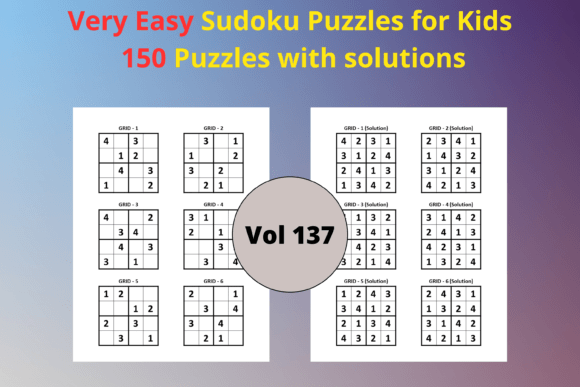
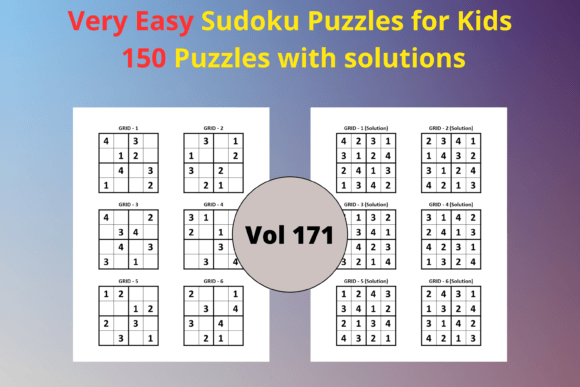
When you are building an activity book for children, a classroom resource, or a digital product for parents, the puzzle interior often becomes a bottleneck. You need a high volume of puzzles, they must be age-appropriate, solutions need to be accurate, and the layout must look professional enough for print or screen. Very Easy Sudoku for Kids 171 addresses that directly. This pack delivers 150 different 4x4 Sudoku puzzles and their solutions, all at a very easy level, in both PDF and editable PPTX formats. It is sized at 8.5 x 11 inches and built specifically as a KDP interior that you can upload and use. The value lies not just in the number of puzzles, but in the way the entire package fits into real workflows — from creating a low-content book on Amazon to printing one-off sheets for a first-grade classroom.
What the Very Easy Sudoku for Kids 171 Pack Contains
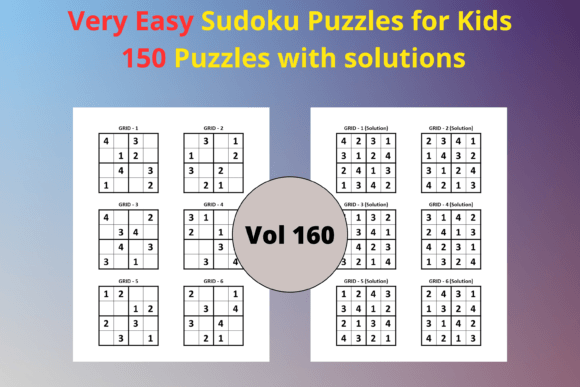
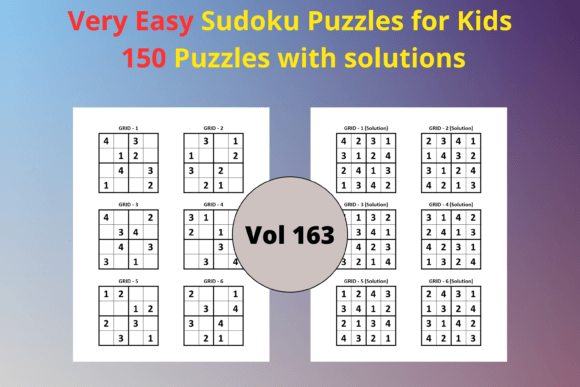
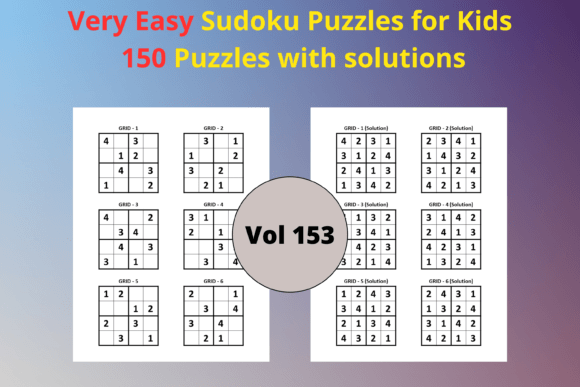
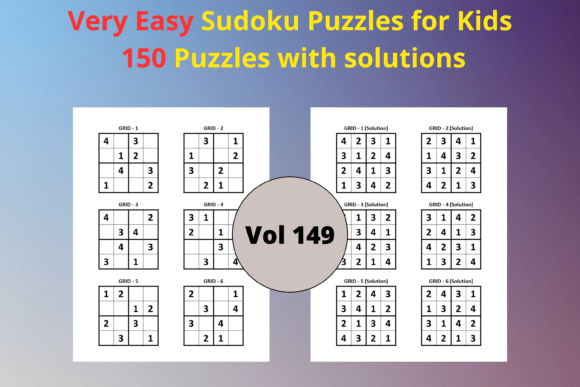
The pack is structured to remove friction. You receive 150 uniquely designed 4x4 Sudoku grids, each with its own matching solution. That means 150 puzzle pages and 150 solution pages, all clearly separated so you can arrange them however you prefer. The very easy difficulty uses only numbers 1 through 4, making the puzzles solvable by children as young as four or five. The smaller grid size and predictable logic help young learners build confidence without hitting the frustration wall common with traditional 9x9 Sudoku.
The files come as a print-ready PDF and an editable PPTX. The PDF is sized at 8.5 x 11 inches with standard margins that align with KDP print guidelines. You can upload it directly, set your cover, and publish. The PowerPoint version gives you full control to add page numbers, a title page, instructions, or your own branding. This dual format means the pack serves both the “quick publish” need and the “customize before release” need, which is exactly how many creators and educators prefer to work.
How This Pack Fits into a Content Creation Workflow
For a KDP publisher, the typical process of creating a kids’ Sudoku book involves puzzle generation, answer key verification, formatting, and layout adjustments. Very Easy Sudoku for Kids 171 skips the first three steps entirely. You start with a collection that has already been compiled, checked, and formatted to a standard book interior size. Your task becomes one of assembly and customization — a much shorter and more reliable sequence.
Consider a common low-content book production cycle:
- Before the project: Research niches, check competition, decide on interior style. Using this pack, you can immediately evaluate whether 150 very easy 4x4 puzzles fit your target age group. Because you have both PDF and PPTX, you can test a print proof within an hour of purchase, not days.
- During the project: Open the PPTX, adjust any design elements, combine with other interiors if you are making a multi-puzzle book, and export your final PDF. The editable format means you are not stuck with a single layout; you can shift margins slightly, add a dotted line for cutting, or insert a space for the child to write their name. Then you create your cover, set up your KDP listing, and upload.
- After publishing: Monitor sales, gather feedback. If parents mention that they would love a slightly harder level to follow, you can return to your editable file, design a second volume with the same branding, and release it quickly. The pack stays in your asset library, ready for iterative projects.
Practical Use Cases Beyond KDP
While the pack is sold as a KDP interior, that is only one application. For educators, the 150 puzzles become a reusable classroom resource. Print a set for math centers, early-finisher activities, or indoor recess. The solutions mean students can self-check, which reduces teacher oversight and builds independence. If you teach remotely or maintain a class blog, the PPTX file lets you export slides as images or a digital PDF that parents can download at home.
Small business owners who run parenting blogs or kids’ activity websites can use the puzzles as a lead magnet. You might take 10 puzzles and solutions, add your logo and website URL inside the PPTX, and offer them as a free printable in exchange for an email address. Because the file is editable, you can rotate puzzles throughout the year without creating new content from scratch. This method turns the one-time purchase into a long-term list-building tool.
For parents looking to reduce screen time, having a large stash of printable puzzles eliminates the need to search for new activities each week. The very easy level is ideal for kindergarten and early elementary ages who are just beginning to understand logic puzzles. The simple 4x4 grid does not overwhelm them, and finishing a puzzle independently gives a sense of accomplishment that encourages more sustained focus.
Organizing the Puzzle and Solution Layouts
How you present the 150 puzzles and 150 solutions affects the user experience significantly. The pack does not force a single arrangement. You might place all 150 puzzles first, followed by all solutions at the back of the book — a layout that keeps the puzzle pages clean and encourages kids to try solving before checking answers. Alternatively, for a workbook feel, you can place each solution directly after or adjacent to its puzzle. This works especially well for printable sheets where a parent or teacher may tear out individual pages.
When you are preparing the final PDF for KDP, remember that even-numbered pages sit on the left and odd-numbered pages on the right. If you place a puzzle on the right side and its solution on the next left side, small hands won’t have to flip back and forth as much. The PPTX format makes it simple to drag and drop slides into the desired sequence. You can also insert blank pages, a progress chart, or a completion certificate at the end to add perceived value to the book.
Maintaining Quality Control Without Reinventing the Wheel
One of the biggest time-sinks in puzzle book creation is verifying that every solution is correct. The Very Easy Sudoku for Kids 171 pack arrives with all 150 solutions already paired to their puzzles. However, it is still good practice to spot-check a percentage before releasing it to customers. You might verify the first ten and then randomly select another ten from the middle and end of the pack. Because the logic is simple and the puzzles follow standard Sudoku rules on a 4x4 grid, errors are unlikely, but that quick verification protects your reviews and reputation.
Pay attention to the PDF’s specs against KDP’s current requirements. The 8.5 x 11 inch size is a common trim, but KDP may flag interior files that lack sufficient margins for bleed, even though most interiors do not require bleed. A quick preflight check in your viewing software confirms whether text or grid lines sit too close to the edge. The PPTX source allows you to add margin guides or nudge content inward if needed, without rebuilding anything.
Long-Term Adaptability and Reuse
The editable PPTX file turns the pack into a template that can serve multiple projects over months or years. Suppose you later decide to create a series: “Very Easy Sudoku for Kids Vol. 1,” “Vol. 2,” and a holiday-themed edition. You can duplicate the PPTX, change the title slide, adjust the color theme, and add seasonal clipart without touching the puzzle data. This modular approach reduces repetitive work and keeps your brand consistent across products.
If you move beyond KDP and sell on platforms like Etsy, the same interior works for printable digital downloads. You can slice the pack into smaller sets of 25 or 50 puzzles, package them differently, and list them at lower price points. Some creators combine these Sudokus with other Very Easy puzzle types — mazes, word searches, dot-to-dots — to produce thick activity books that stand out in a crowded category. The PPTX serves as the master file from which all these variations can stem.
Making the Most of Very Easy Level 4x4 Sudoku
The decision to focus on 4x4 grids at a very easy level is deliberate. It targets children who are not yet fluent with numbers but can recognize 1 through 4. The puzzles reinforce number recognition, logical deduction, and fine motor control through pencil or crayon marks. For a child who has never seen a Sudoku before, a 9x9 grid can feel like an impossible task. A 4x4 grid, however, can be solved in under a minute, giving immediate positive feedback. That quick success loop encourages the child to attempt the next puzzle, and the next.
From a product positioning standpoint, “very easy” signals low risk to parents and teachers who may worry that the activity is too hard. In your product description, you can confidently state the age range (suggested 4–6 or pre-K to grade 1) and even provide a sample puzzle in the preview images. The fact that the pack contains 150 different grids means children can progress through many sessions without repeating a puzzle, yet the difficulty stays consistent — a steady state that builds stamina rather than escalating challenge.
Integrating the Pack with Other Tools and Platforms
If you use tools like Canva, Google Slides, or Adobe Acrobat, the pack’s formats integrate smoothly. The PDF opens in Acrobat for direct-to-print or minor text additions. The PPTX opens in Google Slides for free editing; you can export as a new PDF when done. This interoperability means you do not need expensive design software to customize the book. For marketers who create digital products, the PPTX allows you to add hyperlinks or interactive elements if you plan to offer a tablet-friendly version.
For those who sell on Amazon, pairing this interior with a well-designed cover — also sized at 8.5 x 11 — creates a cohesive product. The cover can feature a bright, kid-friendly design that emphasizes the “150 Puzzles” and “Solutions Included” points. When customers look inside the book using Amazon’s Look Inside feature, they will see a clean, uncluttered interior that matches the promise. This consistency between cover and interior reduces return rates and builds customer trust for future volumes.
From Preparation to Publication: A Realistic Timeline
Because the puzzle research, creation, and formatting are already done, the timeline to publish a new book shortens dramatically. You could download the pack in the morning, spend an hour customizing the PPTX with your brand and preferred layout, export the PDF, check the file in Kindle Create or directly on KDP, and submit it for review by the afternoon. Even with a careful quality control pass, the entire process rarely takes more than a single workday. For someone who manages multiple low-content titles or needs to launch quickly to test a niche, that speed is a tangible advantage.
Teachers and parents get even faster results. You can download, print a few pages, and hand them to a child within minutes. The absence of a complex setup makes the pack suitable for last-minute lesson planning or travel activity preparation. Keep a folder of the PDF on your device, and you always have a ready source of productive, screen-free time fillers.
A Practical Resource That Reduces Friction
The underlying value of Very Easy Sudoku for Kids 171 is that it removes the tedious parts of puzzle content creation. You are not buying just 150 puzzles — you are buying verified solutions, a print-ready layout, an editable source file, and a head start on a finished book or activity set. Whether you are a KDP publisher expanding your kids’ category, a teacher stocking your resource shelf, or a blogger building your email list, the pack supports a faster, more consistent output. The puzzles themselves are simple, but the infrastructure around them — the dual file formats, the standard trim size, the organized pairing of puzzles and answers — transforms a collection of grids into a production-ready asset that moves your project forward.