Understanding Very Easy Sudoku for Kids 125: A Practical Resource for Young Puzzle Beginners
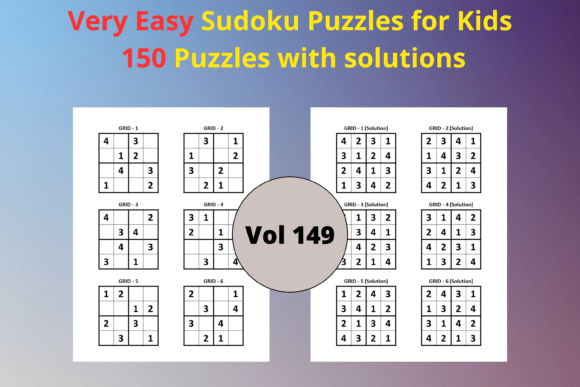
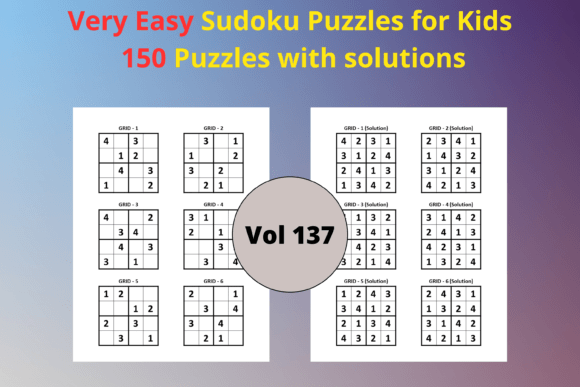
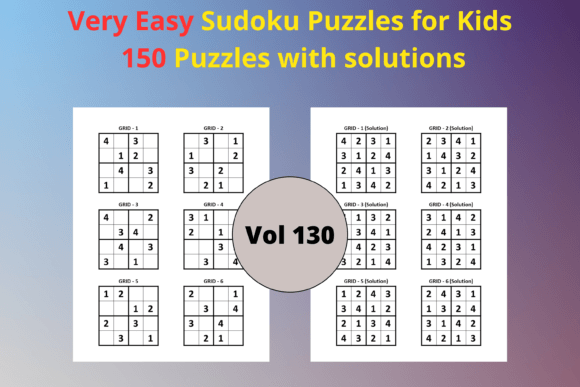
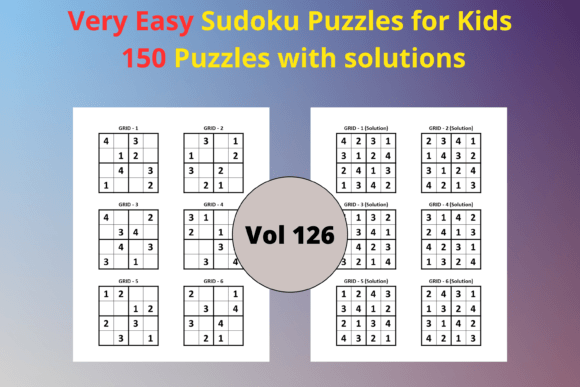
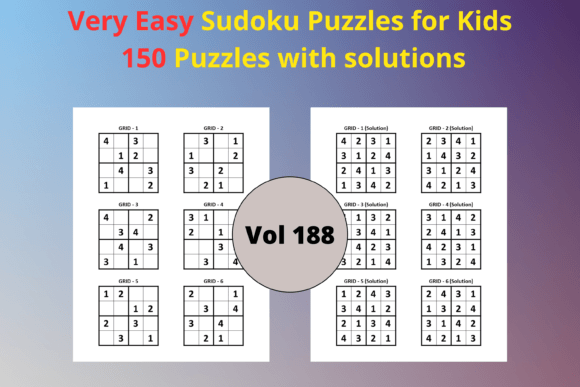
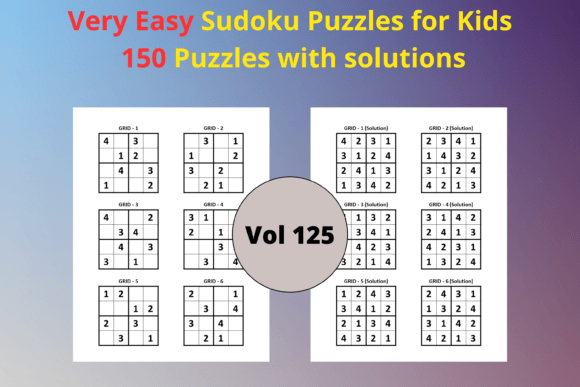
Finding the right puzzle material for young children often means balancing simplicity, engagement, and developmental appropriateness. The Very Easy Sudoku for Kids 125 collection is one option that addresses this balance by offering a large set of 4x4 Sudoku puzzles designed specifically for early learners. This resource includes 150 puzzles and 150 matching solutions, all formatted as a ready-to-use KDP interior. Whether you are a parent assembling activity materials, a teacher building classroom resources, or a publisher preparing a children's puzzle book, understanding what this pack offers—and where it fits among alternatives—can help you make a more informed choice.
What Sets Very Easy Sudoku for Kids 125 Apart
Not all Sudoku resources for children follow the same structure. What makes this particular collection distinct is the combination of grid size, difficulty level, and volume. The puzzles use a 4x4 format, which is the smallest practical Sudoku grid and an intentional design choice for very early puzzlers. Instead of numbers 1 through 9, a 4x4 Sudoku typically uses numbers 1 through 4, or sometimes shapes, letters, or colors. The reasoning is straightforward: younger children who may not yet have strong number sense can still grasp the logic of placing four distinct items in rows, columns, and subgrids without repeating any.
The Very Easy Sudoku for Kids 125 pack leans into this accessibility. With 150 puzzles at a very easy level, children have ample opportunity to practice the same foundational skill without a sudden leap in complexity. This repetition builds confidence. The solutions are included for every puzzle, which means an adult or an older sibling can quickly check answers, or a child learning to self-assess can compare their work. The package arrives as both a PDF ready for upload and an editable PPTX file, sized at 8.5 x 11 inches—standard for print-on-demand interiors and home printing alike.
Comparing 4x4 Sudoku with Other Children's Puzzle Formats
When evaluating whether a 4x4 Sudoku book is the right resource, it helps to place it alongside other puzzle sizes and styles available for children. The most common alternatives are 6x6 Sudoku grids and full 9x9 grids, each serving a different stage of cognitive development.
A 4x4 grid reduces the problem space to four numbers across four rows, four columns, and four 2x2 boxes. For a child just learning what Sudoku means, this smaller scope means fewer variables to track. A 6x6 grid introduces numbers 1 through 6 and slightly larger subgrids, which demands more working memory and longer attention. A 9x9 grid, even at an easy level, asks children to manage nine distinct numbers and significantly more complex spatial reasoning. The leap from 4x4 to 6x6 can be substantial for some children, and the Very Easy Sudoku for Kids 125 collection occupies that entry-level space deliberately.
There are also non-Sudoku puzzle books that blend mazes, word searches, dot-to-dot activities, and simple logic games. These variety books offer broader engagement but less depth in any single skill. A dedicated Sudoku collection like this one narrows the focus, which can be useful if you specifically want to strengthen logical deduction, pattern recognition, and sequential reasoning. However, children who crave novelty may find a single puzzle type less engaging over time unless the challenge level grows with them.
Strengths and Practical Benefits of the Format
The inclusion of an editable PPTX file alongside the PDF is a practical detail worth noting. For KDP publishers, this means the ability to customize fonts, adjust layout elements, or add branding before uploading. For teachers, the editable format allows for modifying puzzles or integrating them into larger lesson materials. The 8.5 x 11-inch size prints cleanly at home and meets standard trim requirements for paperback interiors on most print-on-demand platforms.
Another strength is the volume. A set of 150 puzzles provides substantial content. For a parent creating a single activity book for one child, this may be more than enough for weeks or months of gradual use. For a publisher, 150 puzzles and 150 solutions represent a complete interior that can be formatted into a finished book ready for sale. The very easy difficulty level also means that children are less likely to hit a frustration point early on, which can sustain interest in puzzling longer than a book that escalates too quickly.
The answer key is integrated into the pack as a matching set of 150 solutions, not as a cramped few pages at the end with tiny numbers. Each puzzle presumably has a corresponding solution page, though the exact layout depends on how the interior is arranged. This clarity helps adults assist children efficiently and gives young solvers a clear reference for self-checking—a habit that supports independent learning.
Tradeoffs and Limitations to Consider
No single resource fits every child or every situation. The primary limitation of the Very Easy Sudoku for Kids 125 collection is its fixed difficulty level. All 150 puzzles are described as very easy, which means children who master the 4x4 logic quickly may outgrow the material before they finish the entire set. A child who solves the first 30 puzzles with ease may find the remaining 120 feel repetitive rather than rewarding. In such cases, a collection that progresses from very easy to moderately challenging across its pages—or one that transitions from 4x4 to 6x6 grids within the same book—might provide a longer arc of engagement.
Another consideration is the type of symbols used in the puzzles. Some 4x4 Sudoku books for very young children use animals, fruits, or shapes instead of numbers to reduce abstract thinking demands. If a child is pre-numerate or finds numbers intimidating, a symbol-based Sudoku book might be a gentler introduction. The product description does not explicitly state whether the puzzles use numbers or alternative characters, so clarifying this point before use may be helpful depending on the child's comfort level.
The format as a KDP interior also means that the product is designed primarily for print, whether at home or through a print-on-demand service. If you are looking for an interactive, touch-screen Sudoku app that provides instant feedback, hints, and celebratory animations, this static PDF or printed book will not replicate that experience. Digital apps often adapt difficulty dynamically and include game-like rewards that can motivate some children more effectively than paper puzzles. The tradeoff is screen time versus tactile, unplugged activity—a decision that varies by family preference and context.
Who Is This Resource Best Suited For
The Very Easy Sudoku for Kids 125 collection aligns well with certain use cases more than others. For a parent or grandparent introducing a four- to six-year-old to logic puzzles for the first time, the gentle entry point and generous quantity offer a low-pressure way to explore the activity. There is no shortage of puzzles, so a child can work at their own pace without the looming end-of-book pressure that shorter collections create.
For early elementary classrooms, this resource works as a printable set for quiet work, morning warm-ups, or early finisher activities. Because each puzzle is very easy, a teacher can hand out pages without worrying that some children will be unable to access the material. The uniformity of difficulty also simplifies planning; every student receives a puzzle of comparable challenge, and differentiation can occur through pacing rather than content selection.
For self-publishers or content creators building a children's activity book line, this pack offers a ready-made interior that reduces production time significantly. The editable PPTX file gives publishers control over final presentation, and the PDF ensures a print-ready option is immediately available. The large puzzle count supports creating a book with perceived value, as 150 puzzles feel substantial in a contents page listing.
When You May Want a Different Option
There are several scenarios where alternatives might serve better. If the child is already comfortable with Sudoku basics and can complete 4x4 puzzles in under a minute, a resource that includes 6x6 grids or introduces basic 9x9 puzzles at an easy level could offer more suitable challenge. Graduated puzzle books that mix grid sizes and increase difficulty incrementally tend to hold the attention of developing solvers longer than single-level collections.
If you need puzzles that integrate with a specific theme—such as space, underwater, or seasonal imagery—then a themed Sudoku book might capture a child's imagination more effectively than a standard layout. Thematic elements do not change the logic, but for some children, visual engagement plays a significant role in sustained participation. Similarly, if the child benefits from color-coded grids, large-print puzzles, or tactile elements due to sensory or motor needs, a specially designed resource would be more appropriate.
For households or classrooms that prefer reusable materials, a laminated Sudoku set with dry-erase markers might prove more practical and less wasteful than printing or purchasing a consumable book. The PDF nature of this pack does allow printing individual pages as needed, but the design intention is primarily single-use unless laminated after printing.
Making a Practical Decision: Key Factors to Weigh
When comparing the Very Easy Sudoku for Kids 125 pack with other options, a few questions can guide your evaluation. Consider the child's current puzzle experience: a complete beginner benefits most from resources that prioritize confidence over rapid progression. If the child has never encountered Sudoku before, starting at the very easy 4x4 level is a research-backed approach that aligns with how young children develop logical reasoning skills.
Think about how the material will be used. A parent printing at home for one child has different needs than a teacher distributing copies to 25 students or a publisher preparing a commercial product. The editable PPTX format adds flexibility that a static PDF alone does not. If customization matters—adjusting instructions, adding a name line, changing the font size—this pack accommodates those adjustments. If you only need a print-and-go solution, the PDF alone might suffice, and some comparable products offer lower prices by omitting editable source files.
Evaluate the pacing. A book with 150 puzzles at a flat difficulty level provides consistency, but not growth. This can be exactly right for a child who thrives on predictability and benefits from mastering one skill deeply before advancing. For children who seek novelty and challenge, this consistency might become a limitation. In those cases, you might pair this resource with a more advanced book, using the very easy level as a warm-up and transitioning to harder puzzles in the same session.
Finally, reflect on the context of screen time. In an era when many puzzle experiences are mediated through apps with timers, scores, and alerts, a printed Sudoku book offers uninterrupted, quiet concentration. This aligns well with the goals many parents and educators have for developing sustained attention and offline cognitive engagement. The simplicity of a paper puzzle—no notifications, no battery, no hyperlinks—can be a feature rather than a drawback, depending on your priorities.
What the Very Easy Sudoku for Kids 125 Experience Looks Like in Practice
Imagine a Sunday morning at a kitchen table. A five-year-old opens a freshly printed page from the pack and sees a 4x4 grid with a few numbers already filled in. The task is clear: fill the empty cells so that each row, each column, and each 2x2 box contains the numbers 1 through 4 exactly once. The child scans the grid, spots a row with three numbers placed and one missing, and fills in the obvious answer. Early success brings a smile. The next puzzle looks slightly different, but the rules are the same. Over several sessions, the child begins to recognize patterns—how to scan, how to check, how to correct mistakes without frustration. The adult nearby can offer guidance or simply observe, knowing the solution is on hand if needed. This is the quiet, cumulative learning that very easy Sudoku collections can support when used thoughtfully.
The Very Easy Sudoku for Kids 125 pack does not promise to teach logic, build confidence, or entertain—but in the right hands, it can do all three. The value lies as much in how it is used as in what it contains. A resource that meets a child exactly where they are, without pushing too fast or overwhelming them with choices, has a place in many homes and classrooms. Whether it is the right place for your situation depends on the child, the context, and your broader goals for learning through play.